The meteoric rise of generative AI has triggered a global crisis in memory availability and pricing. Conventional DRAM modules are no longer capable of keeping pace with the sheer scale of modern neural networks, evolving into a critical bottleneck for the world's largest data centers. Against this backdrop, Kioxia is proposing a fundamental shift in the data storage paradigm, envisioning a hybrid architecture where the traditional boundaries between memory and storage are effectively blurred. This solution leverages the synergy between ultra-high-speed SSDs and next-generation data transfer protocols, specifically engineered to alleviate the pressure on compute nodes.
Contemporary AI workloads demand staggering memory capacities to process massive datasets in real-time. However, the physical and economic limitations of DRAM render indefinite scaling unsustainable. To break through this barrier, Kioxia is pivoting toward the evolution of the PCIe 6.0 interface and the implementation of Compute Express Link (CXL), enabling flash memory to operate with efficiency nearly rivaling that of RAM.
Central to this strategy is the GP1 series of drives. Leveraging PCIe 6.0 and the NVMe protocol, these SSDs deliver extreme I/O throughput. Of particular significance is the capability for direct GPU connectivity, which minimizes data transfer latency and bypasses standard system buses—often the primary bottleneck during compute-intensive operations.
Parallel to these efforts, specialized enterprise solutions are evolving. The CM10 lineup, powered by tenth-generation BiCS FLASH technology, and the NX1 series—featuring the E1.S form factor and liquid cooling support—are engineered to solve critical thermal dissipation challenges in high-density server racks. By offloading a portion of computational tasks to these high-performance flash drives, organizations can significantly mitigate DRAM shortages and reduce overall infrastructure costs without compromising system efficiency.
Yet, the most ambitious frontier is the utilization of NAND as a direct, albeit partial, substitute for DRAM. This is where the XL1 memory expansion modules, built on XL FLASH technology, come into play. At their core is the CXL protocol, which ensures deep integration between the drive and the processor. This creates a unified address space, allowing the system to access data on the SSD without the need to first migrate every byte into expensive volatile memory.
This approach slashes read latencies by more than tenfold compared to traditional NAND solutions. The XL1 modules effectively occupy the gap between traditional DRAM and standard SSDs, offering an optimal equilibrium between cost and access speed.
Ultimately, partially replacing or augmenting DRAM with CXL modules can double available memory capacity and boost overall system performance by approximately 30%. It is critical to recognize that NAND is inherently slower than DRAM; thus, a total replacement would be catastrophic for applications sensitive to microsecond latencies. Kioxia’s strategy is not to displace RAM, but to architect a multi-tiered storage hierarchy where DRAM is reserved for the most critical tasks, while a high-speed flash layer manages the bulk of the data.

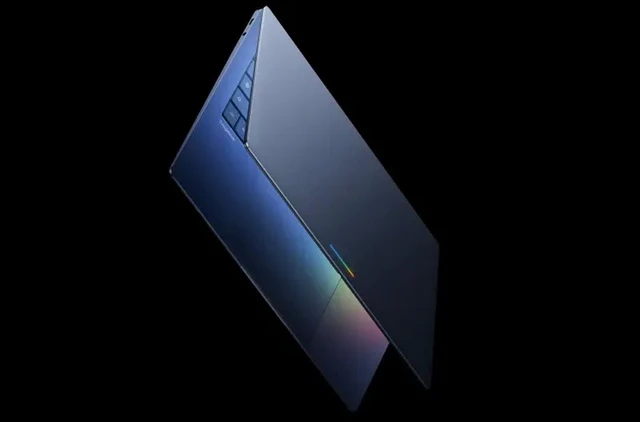 The Commercial Debut of the Googlebook Ecosystem