The global technological landscape is undergoing a fundamental transformation, shifting its center of gravity from infrastructure development to practical application. For years, the market rewarded the architects of hardware; today, however, investor focus has pivoted toward those capable of seamlessly integrating intelligence into the daily lives of millions. Apple and Nvidia are now locked in an open struggle for the title of the world's most valuable company, as they push toward the psychological threshold of five trillion dollars. This rivalry reflects a profound shift in the perception of asset value within the era of generative AI.
The global financial landscape has entered a period of intense recalibration regarding its technological titans. At the center of this shift is a high-stakes rivalry between Apple and Nvidia, whose market valuations have converged near the $4.9 trillion mark. While Nvidia's dominance once seemed absolute, fueled by an explosive demand for raw computational power, investors are now shifting their criteria for success, prioritizing the ability to monetize artificial intelligence through end-user products and integrated services.
For a long time, the market viewed Apple as an underdog in the AI arms race, citing its measured approach to developing proprietary models and relatively modest R&D expenditures compared to its peers. However, this strategy is beginning to yield results: the market has recognized that owning a massive ecosystem of devices and services provides Apple with a unique strategic moat. While Nvidia sells the "shovels" for the AI gold rush, Apple owns the "gold mine" itself—direct access to billions of active users.
The primary catalyst for this growth has been the reimagining of Siri. The overhaul of the voice assistant transforms it from a simple command interface into a sophisticated intelligent agent. Central to this evolution is the concept of Edge AI—processing data directly on the device. By leveraging the vast amount of personal data stored locally on the iPhone, Apple can deliver hyper-personalized interactions that are more accurate and useful than any cloud-based solution, all while maintaining the rigorous privacy standards that have become a hallmark of the brand.
Nevertheless, Apple's current momentum does not signal the twilight of Nvidia's dominance. GPUs remain the bedrock of the entire generative AI industry, and the demand for infrastructure continues to climb. While stock fluctuations reflect shifting investor sentiment, the world's structural reliance on Nvidia's silicon ensures its long-term stability.
Parallel to this, there is a surge of interest in other players within the semiconductor sector. Companies like Micron and SK hynix are demonstrating impressive momentum, driven by the critical market need for High Bandwidth Memory (HBM) essential for modern neural networks. Micron's market capitalization crossing the $1 trillion threshold confirms that the dividends of the AI boom are cascading throughout the entire supply chain.
Yet, volatility persists. The sharp decline of the Philadelphia SE Semiconductor Index, which dipped nearly 19% from its all-time high during a period in July, serves as a stark reminder of the inherent risks. Investors continue to grapple with one fundamental question: is this growth a sustainable structural trend, or are we witnessing a classic speculative bubble destined for a correction?
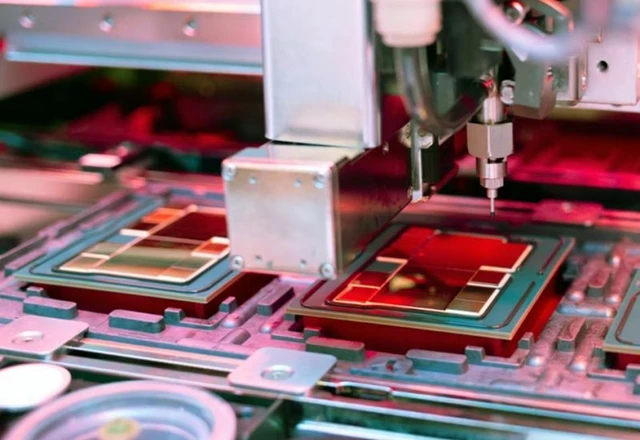 Intel’s Strategic Play for Advanced Packaging Supremacy