The computing landscape is undergoing a fundamental paradigm shift, pivoting from cloud-centric processing toward local AI execution. Today's creative professionals demand tools capable of handling massive datasets with zero latency and absolute data privacy. The latest Asus ProArt lineup seeks to dissolve the boundary between portable mobility and the raw power of a dedicated workstation, driven by a synergy of cutting-edge hardware and specialized AI acceleration frameworks.
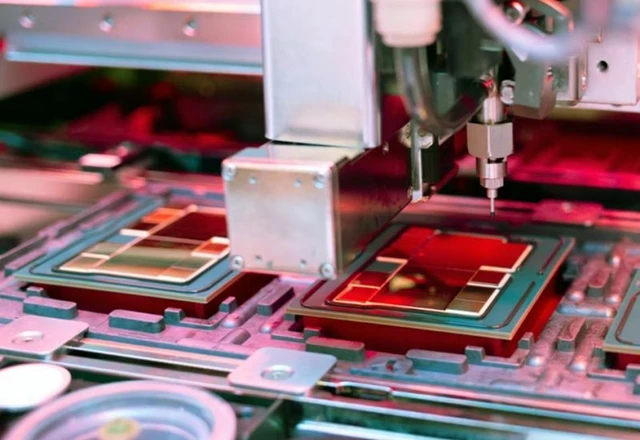
At the heart of Asus's latest strategic pivot lies the Arm-based Nvidia RTX Spark platform. This is not merely another incremental performance bump, but a calculated move to migrate heavy computational workloads from remote servers directly to the end-user's device. By leveraging FP4 precision, the system achieves a throughput of 1 PFLOPS, unlocking capabilities for content creators that were previously the exclusive domain of the cloud.
Local execution of Large Language Models (LLMs) with up to 120 billion parameters, rendering massive 3D scenes exceeding 90 GB, and 4K video generation now happen entirely on-device. This ensures complete workflow autonomy and guarantees absolute data privacy—a critical requirement for professional studios and independent developers.
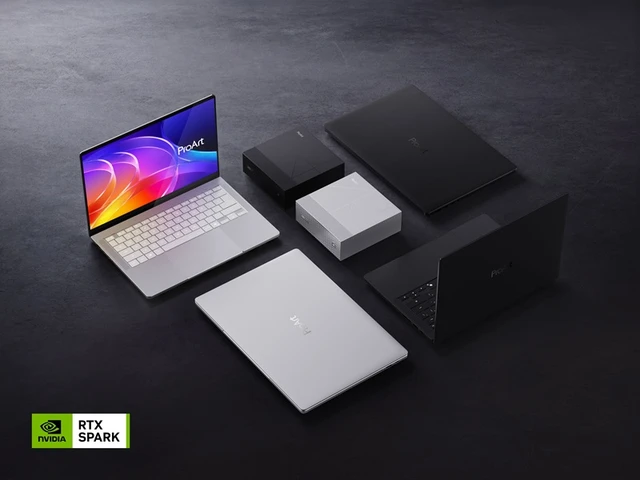
In the mobile sector, the company has unveiled the ProArt P16 and P14, the slimmest and lightest iterations of the series to date. The engineering challenge was to pack high-performance computing into chassis measuring just 12.9 mm for the P16 and 13.9 mm for the P14. With weights of 1.77 kg and 1.48 kg respectively, these devices are fully capable tools for "in-the-field" production.
Visual fidelity takes center stage. The ASUS Lumina Pro OLED displays, featuring a 120Hz refresh rate and a peak brightness of 1600 nits, deliver reference-grade color reproduction. A Delta E rating of < 1 ensures virtually nonexistent color distortion, meeting the industry gold standard for professional grading and retouching. The P16 boasts a 4K resolution, while the P14 is equipped with a 3K panel; both support Nvidia G-Sync to eliminate screen tearing. Power autonomy is handled by 99Wh and 90Wh batteries, respectively.
Alongside its laptop lineup, Asus is expanding its desktop ecosystem with the GR1X mini-PC. Despite its compact footprint (150 × 150 × 51 mm), the device is positioned as a full-fledged workstation for local AI development and heavy 3D rendering. Thermal throttling has historically been the Achilles' heel of such compact systems; however, the GR1X implements an advanced cooling solution featuring dual fans with 218 blades each. Seven fan-speed profiles allow for a 30% increase in thermal capacity over previous iterations, maintaining low acoustic noise even under 24/7 workloads.
Regarding connectivity, the GR1X is engineered for high-speed infrastructure. Support for 10GbE wired networking, Wi-Fi 7, and Bluetooth 5.4 enables the rapid transfer of massive datasets between storage arrays and workstations. The ability to drive up to four 4K monitors transforms this compact unit into a command center for complex, multitasking projects.
The concept is rounded out by a minimalist aesthetic: the devices are available in understated Nano Black and Neo White finishes, emphasizing their status as professional tools where functionality takes precedence over superfluous ornamentation.
 The Horizon of China's Technological Sovereignty in Lithography