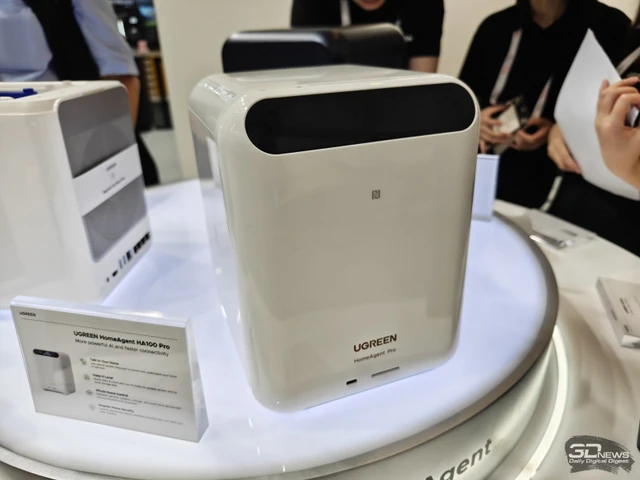
Modern smart home ecosystems are grappling with a fundamental paradox: as functionality expands, so does an absolute reliance on cloud services. Offloading voice commands and video streams to remote servers introduces critical privacy vulnerabilities and exacerbates latency issues. Consequently, the industry is steadily pivoting toward a "local-first" paradigm, shifting the core computational load back within the user's own perimeter. Ugreen’s latest lineup of hubs represents a bold attempt to migrate the "intelligence" of home automation from the cloud directly into the physical living space.
The concept of a proactive smart home—one capable of autonomous situational analysis and response without relying on external servers—has long been an elusive ideal, hampered by the limitations of consumer-grade hardware. However, the evolution of specialized neural processing units (NPUs) has fundamentally shifted the paradigm of data processing. Ugreen is now introducing a solution that converges the roles of a smart home controller, a local AI server, and network-attached storage (NAS), effectively creating a unified computing node for the entire home infrastructure.
At the core of the HomeAgent family is support for the Matter standard and the open-source Home Assistant platform, ensuring seamless interoperability across a vast array of multi-vendor devices. On the hardware front, the integration of dual SATA drive bays and an M.2 NVMe slot allows for the local storage of surveillance archives and databases. This eliminates the need for recurring cloud subscriptions and guarantees data accessibility even during total internet outages.
The lineup is segmented into three performance tiers, with TOPS (Tera Operations Per Second)—the primary metric for neural network throughput—serving as the key differentiator. The entry-level HomeAgent HA100, equipped with 16 GB of RAM, delivers 26 TOPS, which is sufficient for basic automation scenarios and simple command recognition. The Pro version significantly scales these capabilities: with 32 GB of memory and a combined processing power of 205 TOPS, the system can handle more demanding tasks, such as real-time video stream analysis and natural language processing (NLP).
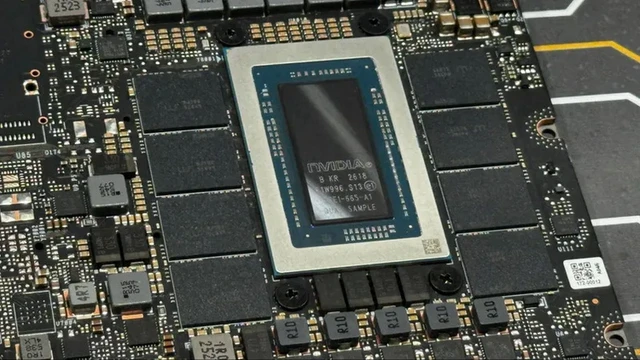
The true technological leap arrives with the MasterAgent MA100. This device transcends the traditional definition of a home hub, functioning as a full-scale server powered by the Nvidia Jetson Thor T5000 platform. Boasting 128 GB of RAM and supporting 100GbE networking and PoE++, this hardware is engineered for ultra-high-performance infrastructure. The integration of Jetson Thor transforms the home into an autonomous ecosystem capable of processing massive datasets and executing complex AI algorithms without external dependencies.
The pricing reflects this strategic positioning, ranging from an accessible $900 for the base model to a staggering $20,000 for the flagship MasterAgent. Despite the premium cost, such devices signal a pivotal shift toward user digital sovereignty. The transition from cloud-centric management to local edge computing not only enhances security and reduces latency but also redefines the philosophy of human-technology interaction, evolving the smart home from a subscription-based service into a tangible private asset.
 Nvidia N1X and the New Era of Arm PCs