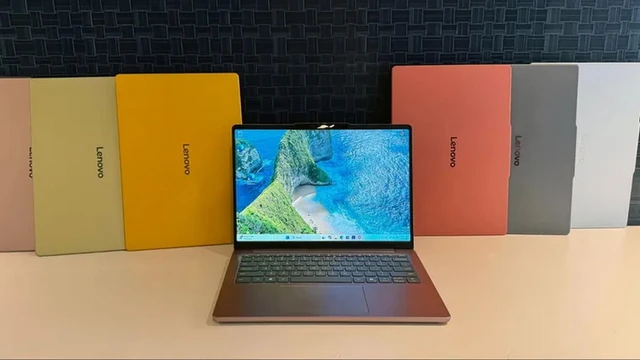
The personal computing industry is undergoing a fundamental paradigm shift: the era of cloud-centric computing is yielding to the local execution of sophisticated neural network models. For today's power user, mere API access is no longer sufficient; there is a growing demand for on-device hardware capable of processing data locally. Lenovo is meeting this challenge head-on by integrating Nvidia's cutting-edge innovations into its premium Yoga lineup. These machines are evolving beyond mere productivity tools, transforming into comprehensive mobile workstations tailored for generative AI.
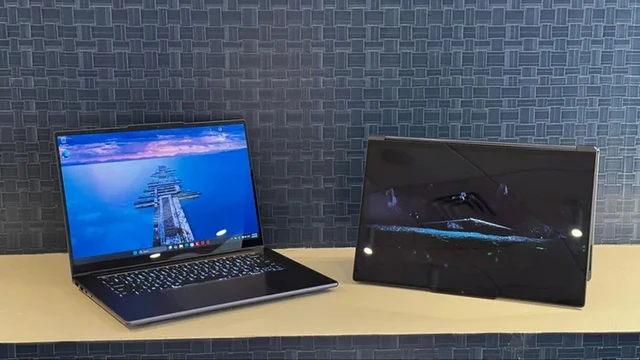
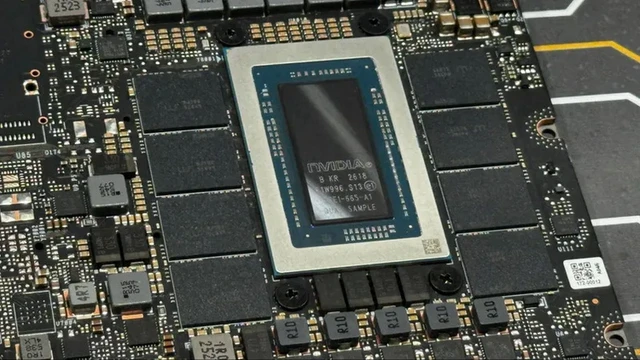
Two systems take center stage: the high-performance Yoga Pro 9n and the versatile Yoga 9n 2-in-1. Both models are powered by the Nvidia RTX Spark platform, which fuses the processing power of Nvidia Grace CPUs with the graphical prowess of the Blackwell architecture. We are looking at significant computational muscle: up to 20 CPU cores and 6,144 CUDA cores. The integration of the Blackwell architecture is critical here, as it is optimized for tensor operations, enabling the execution of heavy machine learning models without the latency typically associated with network-based interactions.
The distinction between the two models highlights divergent use cases. The Yoga Pro 9n is positioned as an uncompromising powerhouse for developers and engineers. Its configuration is formidable, supporting up to 128 GB of RAM and a hybrid storage solution. While the first M.2 slot is occupied by a PCIe 4.0 drive, the second opens the door to PCIe 5.0 standards, delivering the extreme read/write speeds essential for handling massive datasets. The device's power envelope reaches an 80W TDP, allowing the system to maintain peak performance under sustained heavy workloads.
The Yoga 9n 2-in-1, by contrast, is tailored for the creative professional. Here, the emphasis shifts toward ergonomics and flexibility: a touchscreen and support for the Yoga Pen Gen 2 transform the laptop into a digital canvas. Although RAM is capped at 64 GB, this is more than sufficient for the vast majority of content creation tasks. A notable design choice is the return of the soundbar integrated directly into the chassis hinge—an engineering feat that brings high-fidelity audio back to a mobile form factor.
The visual experience on both devices is executed to the highest standard. OLED panels with a peak brightness of 1,100 nits in HDR mode ensure flawless color accuracy. The Yoga Pro 9n features a panel with a 2560 × 1600 resolution and a refresh rate of up to 165 Hz, making it viable even for demanding gaming. The 2-in-1 model offers a slightly higher resolution (2880 × 1800) with a refresh rate of up to 120 Hz, which is optimal for graphic design and high-end retouching.
The tech stack is rounded out by modern connectivity standards: Wi-Fi 7 and Bluetooth 5.4 ensure minimal data transmission latency. Particular mention must be made of the 9.2 MP webcams; they are linked directly to the processor, leveraging hardware acceleration to enhance image quality in real time.
The real-world utility of these laptops is most evident when working with the modern AI stack. Lenovo explicitly confirms support for ComfyUI and Adobe Premiere Pro, as well as the ability to run LTX models for video generation and FLUX for text-to-image synthesis locally. This means the user gains total privacy and independence from cloud subscriptions, effectively turning the laptop into an autonomous content production factory.
The full market release of the N1X (RTX Spark) processor is expected in October, marking the dawn of a new era in mobile workstations—one where the line between a traditional computer and a specialized AI accelerator is effectively erased.
 Nvidia N1X and the New Era of Arm PCs