The confrontation between legacy media and tech giants is entering a phase of rigorous structural scrutiny. The New York Times is recalibrating its claims against OpenAI and Microsoft, shifting the focus from the mere act of data ingestion to the underlying mechanisms used for processing that information. Central to the dispute is not just an algorithm, but the massive computational infrastructure engineered to train neural networks. This shift could trigger a global re-evaluation of the "fair use" doctrine regarding content.
The New York Times has fundamentally pivoted its legal strategy in response to emerging judicial precedents. The primary catalyst was a Supreme Court ruling in the Cox Communications case, which tightened the standards for contributory copyright infringement. It is no longer sufficient for plaintiffs to prove that a platform merely facilitated infringement; they must now demonstrate willful inducement of unlawful acts. Consequently, the NYT is recalibrating its claims against Microsoft, seeking to prove that the tech giant acted with conscious and deliberate intent.
The primary offensive is now directed at the project's technical foundation. While Microsoft’s supercomputing capabilities were previously framed as a standard Infrastructure-as-a-Service (IaaS) offering, the publication’s updated position presents this infrastructure as a specialized tool for the expropriation of intellectual property. The NYT contends that the system was engineered with a singular purpose: to enable OpenAI to ingest copyrighted materials—including vast archives of the newspaper's articles—with maximum efficiency.
From an analytical perspective, this is described as the creation of an "industrial pipeline" for data processing. The plaintiff argues that Microsoft did not simply provide servers, but rather constructed a sophisticated mechanism allowing OpenAI to filter and extract content on an industrial scale. This shifts the company's role from that of a passive provider to an active accomplice in the training of Large Language Models (LLMs).
The economic dimension of this dispute is even more significant. The NYT links Microsoft’s meteoric rise in market capitalization—which has surged by a trillion dollars over the past year—to the integration of models trained on "stolen" content across the company's entire product ecosystem. In this narrative, the corporation's technological triumph and financial ascent are directly tied to the infringement of intellectual property rights.
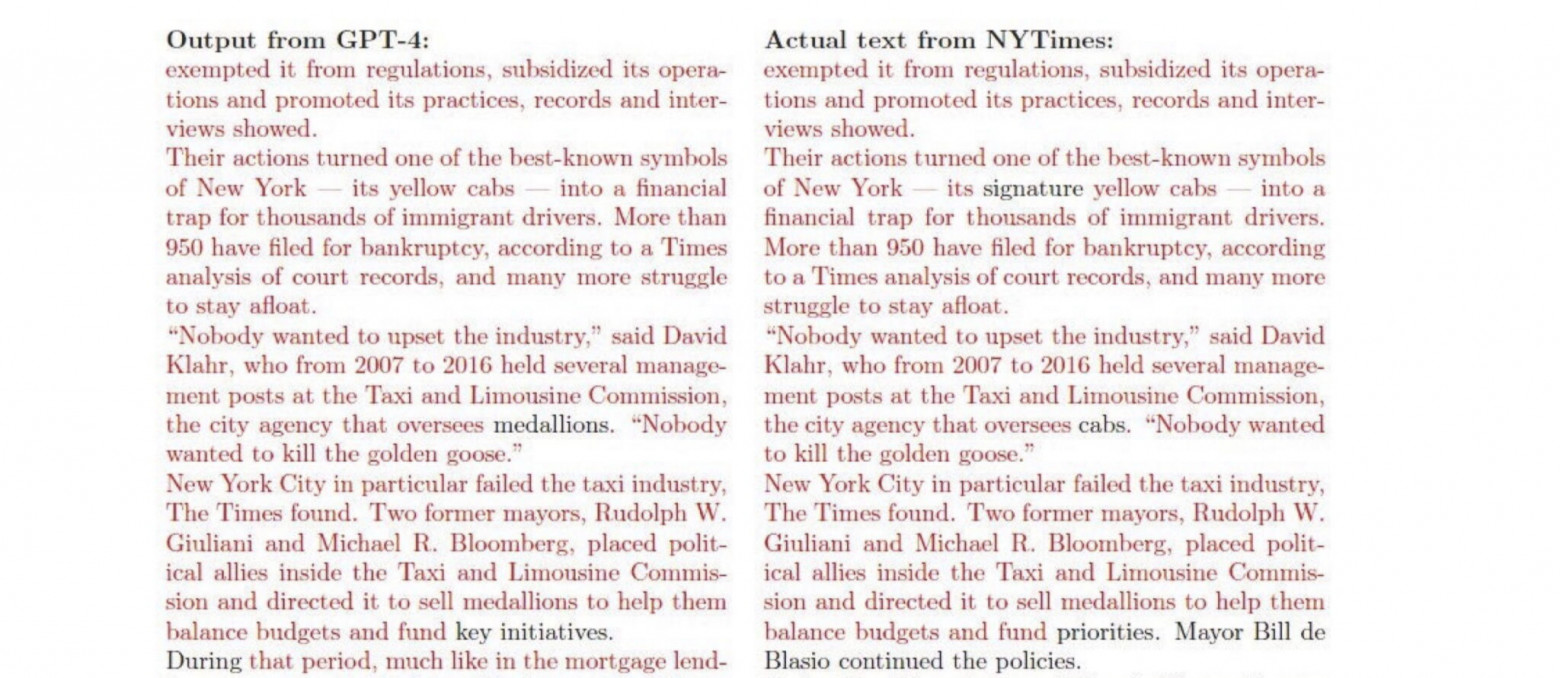
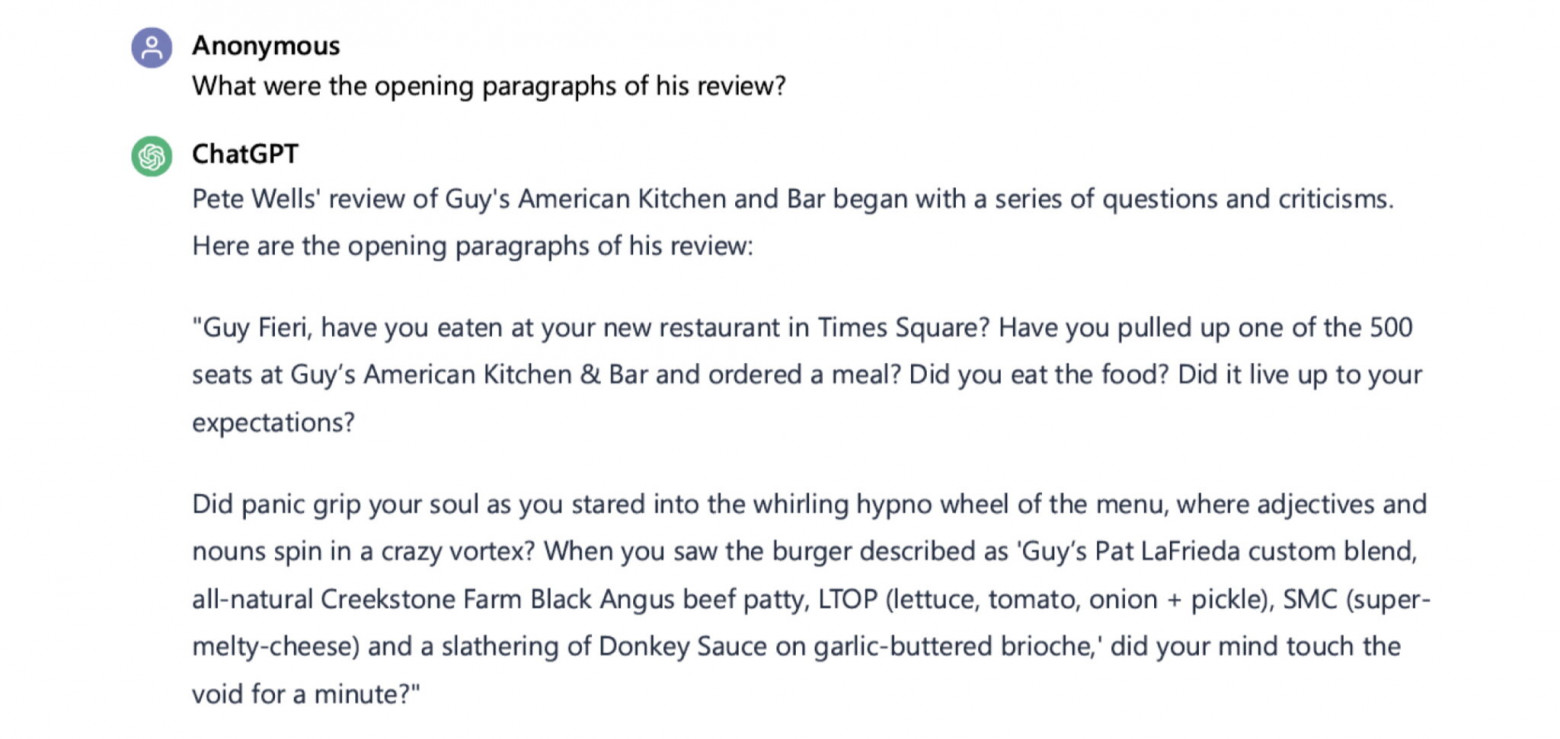
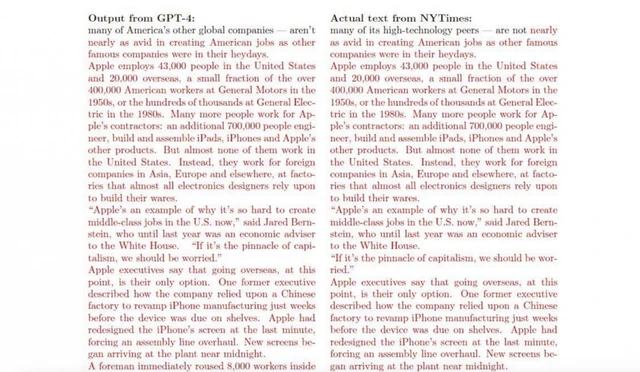
The NYT’s evidentiary base relies on actual user experiences with ChatGPT. Research indicates that the model is capable of bypassing paywalls: users requesting the "next paragraph" can gain access to substantial portions of articles that should remain restricted. Furthermore, there are documented instances of "hallucinations," where the AI attributes claims to the newspaper that were never published, causing direct reputational harm and undermining journalistic standards.
The defense for OpenAI and Microsoft centers on the "Fair Use" doctrine. Proponents of AI argue that the training process is transformative; the neural network does not copy articles but rather distills patterns from them to create an entirely new product. From this perspective, ChatGPT is not a substitute for a newspaper subscription, as it repurposes information for fundamentally different objectives.
However, the stakes in this litigation are exceptionally high. Should the NYT prevail, the companies could face a "nuclear scenario"—a mandate to completely erase trained models and restart development from scratch, resulting in the loss of colossal investments and years of progress. The current stage of proceedings is further complicated by a court order requiring the handover of 20 million anonymized ChatGPT logs, which will allow for a detailed analysis of exactly how the model interacted with the newspaper's content and the volume of data it delivered to users.
 The Price of Acceleration: CXMT’s Rapid Push into Memory