The global semiconductor market is undergoing a period of unprecedented expansion, fueled by the meteoric rise of generative AI. At the heart of this surge are memory manufacturers, whose production capacities have become mission-critical for the training and deployment of today's sophisticated neural networks. Japanese industry titan Kioxia is now seeking to capitalize on this technological demand, translating market momentum into significant financial growth. Its planned entry into the US market via depositary receipts marks a pivotal new chapter in the global struggle for semiconductor supremacy.
Kioxia, a pivotal player in the global memory market, is gearing up for a massive capital injection. The Japanese corporation is planning to raise at least $10 billion through the issuance of American Depositary Receipts (ADRs). To execute this ambitious maneuver, Kioxia has entered preliminary negotiations with Wall Street titans: Bank of America, Goldman Sachs Group, and JPMorgan Chase & Co. The deal is expected to materialize within the next two years.
The decision to utilize ADRs is driven not only by a quest for liquidity but by a calculated strategic move. Securing a spot in specialized semiconductor indices provides a direct gateway for major institutional investors who operate within strictly defined asset baskets. Amidst the current artificial intelligence boom, any securities tied to the production of high-performance memory become prime targets for investment, allowing Kioxia to effectively capitalize on the prevailing market euphoria.
This financial pivot was made possible by a meteoric rise in the company's share price on the Tokyo Stock Exchange. Since the beginning of the year, Kioxia's stock has surged by nearly 400%, propelling the company's market capitalization to a formidable $180 billion. To manage this rapid ascent and make shares more accessible to a broader investor base, the company implemented a 3-for-1 stock split and launched a $5.2 billion share buyback program. Such measures are traditional levers used to stabilize pricing and expand shareholder equity during periods of high volatility.
However, the trajectory toward financial dominance is not without its hurdles. In July of this year, Kioxia was forced to issue a tempered financial outlook, as its final reports failed to meet the inflated expectations of analysts. This highlights a broader sectoral trend: even with colossal demand for AI hardware, actual financial performance occasionally lags behind market projections.
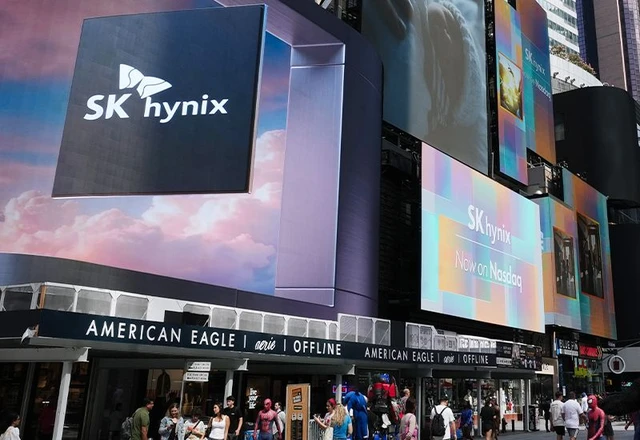
The context of this deal becomes even more significant when viewed against the actions of its competitors. South Korea's SK hynix previously set a historic record for foreign issuers, raising $26.5 billion during its US market debut. This has sparked a sort of "capital arms race" for access to US markets, where the world's primary investment funds are concentrated.
Simultaneously, the market is demonstrating acute sensitivity to regulatory headwinds. Any discourse regarding the safety of advanced AI models or restrictions on their development is immediately reflected in the Nasdaq 100 and corresponding ETFs, triggering short-term dips. This implies that Kioxia's success will depend not only on the quality of its product lineup but also on the geopolitical climate and the regulatory stance toward high-tech innovation.
Kioxia originally slated the ADR issuance for the spring of 2027, but current market dynamics have forced management to accelerate the timeline. The strategic window has now shifted to 2025–2026. The final valuation of the offering will be determined immediately prior to listing, allowing the company to precisely time its entry to coincide with the peak of demand for AI infrastructure.
 Anthropic’s Strategic Financial Surge Ahead of Its IPO