The era of cloud-centric robotics is gradually yielding to the rise of edge intelligence, where latency and data privacy have become mission-critical. As modern neural networks undergo rapid optimization and miniaturization, complex cognitive functions are migrating directly onto end-point devices. Nvidia is meeting this demand with the launch of the Jetson Orin Nano 2—a platform that effectively serves as an accessible "brain" for the next generation of autonomous systems. This hardware effectively blurs the line between heavyweight server-side computing and mobile electronics.
The artificial intelligence landscape is undergoing a pivotal shift: the era of trillion-parameter behemoths is giving way to optimized small and medium-sized models. Today, compact neural networks are capable of solving tasks that, only a year ago, required massive server-side infrastructure. This trend is the driving force behind the development of the Jetson Orin Nano 2—a compact computing module engineered for local AI execution within robotics and autonomous systems.
Within Nvidia's global strategy, this platform serves as the final link in the intelligent systems pipeline. The process begins with digital twins and simulations in Omniverse and Cosmos, progresses through intensive model training on high-performance DGX systems, and culminates in deployment on Jetson. In this capacity, the module acts as the operational edge, translating learned intelligence from the virtual realm into physical reality.
The hardware architecture of the new platform features an eight-core Arm processor and 8 GB of RAM, delivering a performance ceiling of 78 trillion operations per second (TOPS). Compared to its predecessor, the Orin Nano Super, this latest iteration demonstrates a twofold increase in efficiency. This leap was achieved through a comprehensive overhaul of the tensor cores and expanded memory bandwidth—upgrades that are critical for real-time data processing.
Particular emphasis has been placed on power efficiency, which remains the primary bottleneck for mobile robotics. Operating under a 15W power limit, the device consumes 40% less energy while maintaining peak performance. Such optimization extends the operational autonomy of devices without requiring an increase in battery capacity.
A defining advantage of the Jetson Orin Nano 2 is its ability to run Large Language Models (LLMs) and Vision-Language Models (VLMs) locally. Support for solutions such as Nvidia Cosmos, Nemotron, Google Gemma 4, and Alibaba Qwen 3 allows robots to process information without relying on cloud services. This not only minimizes latency but also ensures data security, as all processing occurs entirely on-device.
The practical application of such computing power opens new frontiers across various industries. For instance, Wing is integrating the platform into its delivery drones to enhance navigation precision. In the consumer sector, Matic Robots plans to deploy the module in domestic cleaning robots. Powered by Jetson, these devices will be able to interpret human gestures, engage in natural dialogue, and perform semantic mapping of their environment, gaining a sophisticated contextual awareness of their surroundings.
The scalability of this technology is bolstered by an extensive partner network, including industry leaders such as Advantech, ADLINK, and Seeed Studio. Collaborative efforts to develop reference designs and specialized carrier boards will accelerate the integration of Jetson Orin Nano 2 into security systems, autonomous control units, and industrial navigation.
Modules and developer kits are expected to arrive in the first half of 2027, marking a new era of accessible, high-performance AI for the mass robotics market.

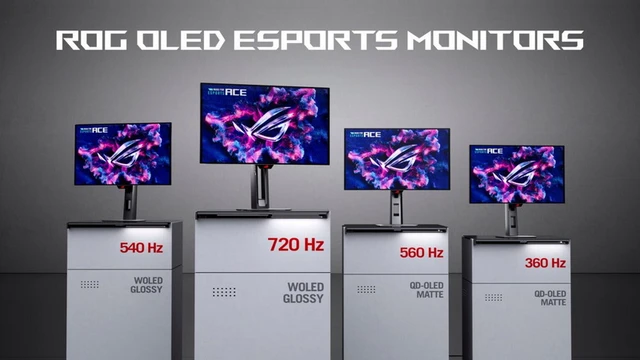 The Speed Limits of Modern Gaming Displays