The dread of pervasive automation and the subsequent erosion of job security has become a defining narrative of recent years, particularly among entry-level professionals. Yet, emerging data suggests a counter-intuitive trend: the aggressive integration of artificial intelligence is actually correlating with workforce expansion. While headlines are dominated by reports of mass layoffs, strategic investments in AI are carving out new pathways for junior talent. This paradox underscores a profound structural metamorphosis within the contemporary labor market.
The prevailing narrative surrounding generative AI is frequently dominated by apocalyptic forecasts of mass unemployment. Recent waves of layoffs across Big Tech have only fueled this anxiety, creating a perception that the barrier to entry for junior talent has become insurmountable. However, a granular analysis of data from Ramp and Revelio Labs offers a fundamentally different perspective: companies investing most aggressively in AI tools are actually seeing a notable increase in headcount.
According to a report covering nearly 22,000 organizations, the workforce of "active adopters" grew by 10.2% within the first few months. Notably, entry-level positions expanded even faster, rising by 12%. In this methodology, active adoption was defined as companies spending an average of at least $30 per employee per month on AI services. It must be acknowledged that this threshold is relatively low—often reflecting the cost of a few corporate subscriptions rather than a fundamental overhaul of business processes. Nevertheless, it is precisely this group of companies that demonstrated positive hiring momentum.
This growth was recorded across nearly all key verticals, from engineering and finance to marketing, sales, and customer support. The most pronounced expansion occurred within software development, internet services, and media. The underlying logic is rooted in the economics of scale: AI significantly lowers the cost and accelerates the production of baseline deliverables—writing code, debugging, generating technical documentation, and internal automation. This boosts overall business profitability, which in turn incentivizes companies to expand not only their technical departments but their entire supporting infrastructure.
However, these optimistic figures should be approached with caution. The study's sample is skewed toward high-tech firms, which are often venture-backed and already in a phase of natural rapid growth. In such a context, it becomes difficult to discern whether AI is the primary driver of hiring or if it is simply being implemented where business expansion was already underway. The authors themselves concede that their work does not prove universal job creation, but it effectively challenges the thesis of an inevitable and total displacement of humans by algorithms.
What we are actually witnessing is a profound stratification of the market. Companies that limit themselves to superficial AI usage or isolated pilot projects see no growth in headcount. The competitive advantage is shifting toward players with sufficient capital, robust technical teams, and high managerial bandwidth.
This picture stands in stark contrast to data from Goldman Sachs, which suggests a loss of approximately 16,000 jobs per month, with Generation Z and newcomers bearing the brunt of the impact. It is likely that both assertions are correct: the labor market has bifurcated into two distinct segments. On one side are traditional structures where AI is indeed replacing humans to slash overhead. On the other are dynamic ecosystems where automation acts as a catalyst for growth, allowing companies to scale faster and hire more personnel to manage increased business volumes.

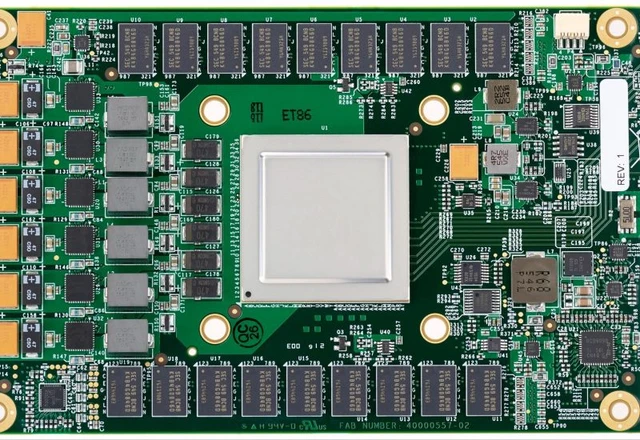 Anthropic’s Strategic Push for Hardware Independence