The global race for nanometer supremacy is fundamentally redefining the landscape of the semiconductor industry. Intel’s transition to pilot production on the 18A-P process marks a pivotal milestone in the company’s strategic bid to reclaim dominance within the contract chip manufacturing sector. This move has triggered a ripple effect across the entire supply chain, most visibly manifested in the market valuation of ASML. The synergy between cutting-edge equipment and the capacity for high-volume wafer production is once again charting the trajectory for the entire sector.
The semiconductor market responded with a surge of optimism following reports of Intel's progress in developing its enhanced 18A-P process node. The transition of this technology to the pilot production stage signals that mass production is expected to commence within a six-to-twelve-month window. This news acted as a powerful catalyst for ASML shares, which climbed to a 52-week high of $1,915. Simultaneously, Intel's stock, having endured a period of significant volatility, demonstrated a confident recovery, regaining ground after recent downturns.
At its technical core, the 18A-P update is a sophisticated optimization of the flagship 18A process. This new iteration provides developers with granular flexibility: they can either opt for a 9% performance boost while maintaining current power levels or achieve a radical 18% reduction in energy consumption without sacrificing computing power. Particular emphasis has been placed on thermal management, with heat dissipation efficiency improving by 20–40%—a critical factor for modern high-performance systems and data centers. A key strategic advantage is the full compatibility between the two processes; existing chip designs can be migrated from 18A to 18A-P without the need for costly and time-consuming architectural overhauls.
However, beneath this technological milestone lies a complex financial reality. Intel's foundry division continues to face formidable challenges, recording substantial operational losses amounting to billions of dollars. The company's current investment strategy is essentially a high-stakes gamble on its ability to attract external customers for large-scale production. Intel is currently focused on demonstrating process stability by providing potential clients with wafer samples and verifying high yield rates—the primary benchmark of trust in the lithography industry.
The correlation between Intel's success and ASML's capitalization is intrinsically linked. ASML holds an uncontested monopoly in the production of Extreme Ultraviolet (EUV) lithography equipment. Any expansion of Intel's manufacturing capacity based on leading-edge nodes inevitably drives demand for ASML's systems. Consequently, the Dutch firm serves as a bellwether for the entire industry: when giants like Intel accelerate the implementation of new process nodes, ASML becomes the primary beneficiary of that growth.
The financial trajectories of both companies over the past year show a remarkable recovery from their local minima. Despite its internal struggles, Intel managed to exceed analyst revenue expectations in the first quarter, triggering a sharp spike in its share price. The market is now eagerly anticipating the upcoming quarterly reports: ASML is set to present its results in mid-July, with Intel following shortly after. These disclosures will allow investors to determine exactly when the 18A-P production launch will begin generating tangible revenue and the timeline for Intel's foundry division to reach its break-even point.
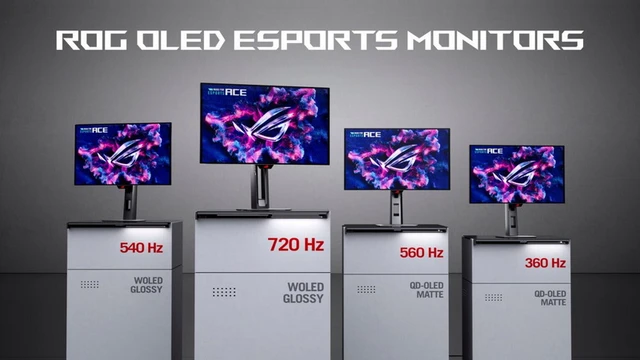 The Speed Limits of Modern Gaming Displays