The modern semiconductor market demands an uncompromising concentration of resources on core competencies. Amidst fierce competition, even the industry's titans are being forced to recalibrate their ambitions regarding component manufacturing. Intel has once again become the focal point of speculation regarding a potential return to memory chip production; however, the company's strategic trajectory is shifting away from mere fab ownership toward deep system integration.
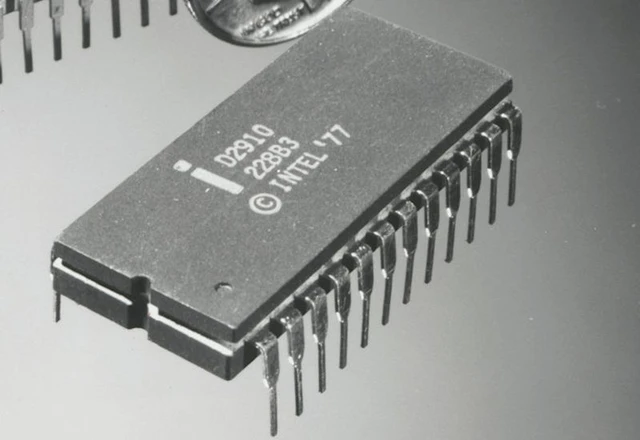
The memory industry has always been one of the most cutthroat segments of microelectronics, defined by cyclical demand and aggressive pricing pressures. For Intel, this journey began as early as 1968 with the release of DRAM chips; however, by the mid-eighties, the company recognized the inherent risks of this market and pivoted its priorities. A subsequent attempt to enter the NAND segment also ended in divestment, with the business eventually being sold to the South Korean giant SK hynix.
Recent ambiguous remarks from Director Lip-Bu Tan—who emphasized the importance of memory technology investments and recruited the former head of SK hynix—sparked a wave of speculation regarding a potential Intel comeback. The market interpreted these moves as a signal that the company was returning to the fold of semiconductor memory manufacturers. However, CFO David Zinsner was unequivocal during a Deutsche Bank conference: Intel has no intention of returning to the independent fabrication of DRAM chips.
Management's stance is that modern efficiency is achieved not through owning the entire production cycle, but by eliminating data transmission bottlenecks. Rather than competing with the three dominant players in the memory market, Intel is positioning itself as the lead system integrator. The company's strategy is now focused on optimizing the interplay between the processor and memory—a critical factor for the advancement of artificial intelligence and high-performance computing (HPC).
The technological answer to this challenge lies in advanced packaging. The implementation of EMIB-T technology allows for significantly more efficient integration of various die elements, reducing the physical distance between logic and memory. This enables performance metrics previously attainable only through deep vertical integration, but without the burden of maintaining capital-intensive and high-risk memory fabrication plants.
Consequently, Intel is transitioning from an "all-in-one manufacturer" model to that of an "ecosystem architect." The focus has shifted toward developing products that maximize the capabilities of third-party memory providers, transforming external dependencies into strategic partnerships.
 The Korea-Japan Technological Alliance