The era of Large Language Models has effectively transformed chat histories into massive, personalized knowledge bases. Yet, for too long, retrieving specific information from thousands of archived dialogues remained a cumbersome and often inefficient endeavor. OpenAI is addressing this gap by introducing a comprehensive internal search mechanism capable of indexing all data types. This update marks the final transition of the chatbot from a mere conversational partner into a structured archive of the user's own intellectual experience.
For too long, interacting with neural networks has been plagued by the issue of "memory fragmentation." Users accumulated hundreds of dialogues that evolved into a digital graveyard of data, where critical insights, code snippets, and analytical breakdowns were lost amidst endless lists of chats. Resolving this required the development of a robust indexer capable of parsing not just headers, but the deep semantic substance of conversations.
The new search functionality in ChatGPT implements the concept of a unified information gateway. The system can now scan a user's entire data corpus—from the text of legacy dialogues to uploaded documents and even image metadata. This transforms the interface into a comprehensive knowledge management system, where search operates on a principle of deep immersion.
The technical implementation features a flexible content-type filtering system, allowing users to instantly strip away noise and focus on specific files or projects. Particular emphasis has been placed on the user experience: the navigation mechanism ensures a frictionless transition. Clicking a search result doesn't merely open a chat; it redirects the user precisely to the relevant message, eliminating the need for manual scrolling through exhaustive discussion threads.
This tool has been integrated across all interaction layers: the web interface, as well as iOS and Android applications, now have synchronized access to the search engine. This ensures total data consistency regardless of the device being used.
A pivotal strategic move was the democratization of this feature. OpenAI has made search available to all user tiers, including those on free accounts. This approach underscores the company's ambition to position ChatGPT as the primary professional workspace—a hub where searching through one's own digital footprint becomes as intuitive and natural as browsing the global web.

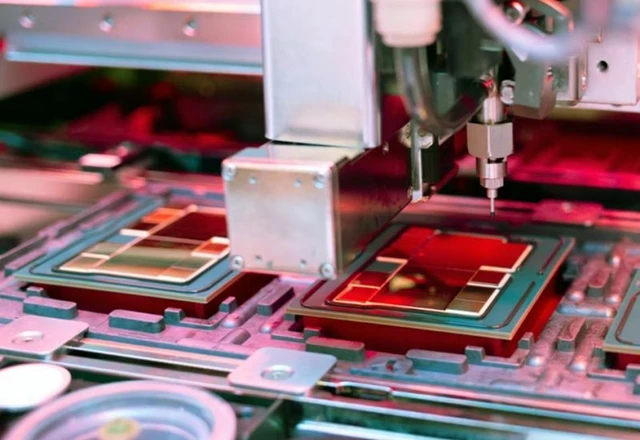 Intel’s Strategic Play for Advanced Packaging Supremacy