For too long, mobile gaming has been held hostage by rigid power constraints. Attempts to translate desktop-class graphics to the smartphone form factor have inevitably hit a wall of overheating and plummeting battery life. Arm is now proposing a radical escape from this deadlock by fundamentally reimagining the image generation process. The new Mali G2 NX platform shifts the primary focus from traditional rendering toward intelligent frame reconstruction.
The modern smartphone is a device operating under a severely constrained energy budget. While desktop GPUs operate in the hundreds of watts, a mobile device's graphics subsystem is allocated a mere 1–2W. Yet, the demand for visual fidelity is growing exponentially: users expect high-resolution textures, authentic ray tracing, and fluid motion. In the Mali G2 NX, Arm's engineers have adopted a bold architectural shift, effectively partitioning GPU resources in a one-to-seven ratio. Only one-eighth of the processing power is dedicated to native rendering, while the remaining seven-eighths are handed over to AI algorithms.
This strategy is built upon three technological pillars. The first is Neural Super Sampling (NSS). The system renders a frame at a low resolution (e.g., 540p), which AI then upscales to 1080p or higher. To reconstruct fine detail, the system utilizes motion vectors, scene depth data, and information from previous frames. This approach not only ensures temporal stability and high-quality anti-aliasing but also halves the load on dynamic random-access memory (DRAM) and power consumption per individual frame.
The second critical component is Neural Frame Rate Upscaling (NFRU), which is essentially a mobile counterpart to the frame generation technologies found in Nvidia's DLSS or AMD's FSR. The algorithm analyzes two consecutive rendered frames, studies object dynamics, and synthesizes an intermediate image. To achieve this, a specialized neural accelerator is integrated into the GPU, allowing it to determine actual object motion with high precision, creating the illusion of increased fluidity without the need to fully render every frame.
Completing the triad is Neural Super Sampling and Denoising (NSSD). This technology optimizes real-time ray tracing. Rather than calculating a massive number of rays per pixel—a prospect fatal to mobile power budgets—the AI reduces the ray count, effectively "filling in" and denoising the image.
To implement these capabilities, Arm offers a flexible suite of solutions. The flagship Mali G2-Ultra NX features ten or more shader cores, at least six neural accelerators, and dedicated ray-tracing blocks within each core. More balanced versions—Premium and Pro—offer a scalable number of cores (from one to nine) and optional integration of neural accelerators and RT blocks, allowing manufacturers to tailor the configuration to specific market segments.
Beyond AI-driven reconstruction, the Mali G2 NX introduces critical hardware enhancements. Third-generation ray tracing now employs shared triangle edge calculation. This allows for more efficient cache utilization and significantly reduces the volume of data transmitted to the DRAM—tests show a 13% reduction in memory load. Additionally, support for Hardware Opacity Micromaps (OMM) has been implemented, optimizing ray calculations when interacting with transparent or semi-transparent objects.
The results of this paradigm shift are impressive: in the Ultra NX configuration, gaming performance can jump from 15 to 60 frames per second, while DRAM resource consumption drops by 70%. Even without AI features, the updated ray-tracing blocks provide a 14% performance boost, rising to 24% in full mode.
Clearly, transitioning to this rendering model will take time. Arm predicts that full integration by game developers will take approximately eighteen months. Nevertheless, the first chips based on the Mali G2 NX are expected to hit the market in the coming weeks, ushering in an era where mobile graphics quality is defined not by the "brute force" of transistors, but by intelligent data processing.

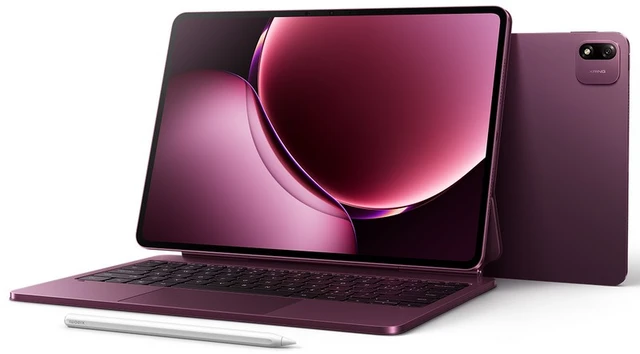 Power and Poise: The Xiaomi Pad 9 Pro Max