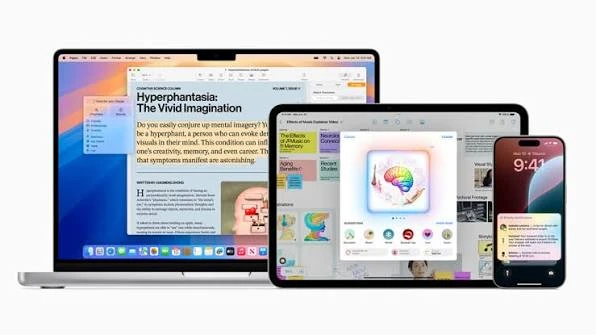
The global AI race has migrated from the confines of cloud data centers directly onto edge devices, effectively transforming the smartphone into a personal cognitive assistant. For Western tech giants, however, China remains one of the most complex battlegrounds, defined by rigorous regulatory scrutiny and stringent mandates for digital sovereignty. Securing the necessary clearances from Chinese authorities provides Apple with a strategic opening to reclaim its leadership in the region. The company is now poised to deploy its AI suite, carefully calibrated to align with the unique requirements of local legislation.
Apple’s breakthrough into mainland China has finally materialized following the Cyberspace Administration of China's (CAC) official inclusion of Apple Intelligence in its registry of approved generative models. This milestone clears the primary administrative hurdle: in China, any user-facing neural network must undergo rigorous state certification to ensure compliance with national ethical and legal standards.
Executing this rollout required a fundamental overhaul of Apple's technical stack. While the global version relies on proprietary models integrated with OpenAI’s ChatGPT for complex queries, the Chinese iteration utilizes a fundamentally different configuration. At its core is Alibaba’s Qwen family—one of the region's most powerful Large Language Models (LLMs). Additional functionality, specifically regarding search and the processing of localized content, has been delegated to Baidu.
This strategy is driven not only by Apple's desire for a swift launch but also by the stringent demands of Chinese legislation. Foreign vendors are mandated to employ state-approved models and collaborate with local developers. In effect, this transforms Apple’s famously "closed ecosystem" into a hybrid structure, where data management and response generation are partially outsourced to trusted domestic partners.
The delay in deploying AI features created a competitive void that local rivals were quick to exploit. While Apple navigated regulatory complexities, brands such as Huawei, Xiaomi, Oppo, and Vivo had already integrated deep neural capabilities into their flagship devices. With smartphone hardware reaching a performance plateau, intelligent services have become the primary battleground for consumer loyalty. The absence of Apple Intelligence significantly eroded the iPhone's appeal among a Chinese audience accustomed to rapid software evolution.
Although the exact release date remains under wraps during internal preparations, the regulatory groundwork has been laid. For Apple, this is more than a mere interface update; it is a strategic gambit to reclaim market share and demonstrate that its vision of "personal intelligence" can thrive even under strict state oversight and fierce competition from China's national champions.
 Intel’s Strategic Play for Advanced Packaging Supremacy