Technological progress in autonomous mobility has largely centered on optimizing routes and increasing speeds, frequently overlooking the fundamental requirements of accessibility. For millions living with disabilities, the true value of a self-driving vehicle lies not merely in the absence of a human operator, but in the restoration of absolute autonomy in movement. Tesla is now pursuing an ambitious vision: a specialized robotaxi designed to dismantle the physical barriers inherent in urban infrastructure. This shift transforms autonomous transport from a luxury novelty into a critical instrument for upholding the fundamental right to freedom of movement.
The vision for the future of mobility is predicated on a fundamental principle: technology must be accessible to everyone, regardless of physical limitations. For wheelchair users, operating a vehicle or even securing suitable transport often evolves into a complex logistical ordeal. In this context, Tesla’s initiative to develop a specialized robotaxi appears to be more than just a strategic expansion of its product lineup; it is an attempt to address a profound social disparity.
The primary challenge here lies at the intersection of industrial design and ergonomics. An adapted vehicle must ensure complete autonomy during ingress and egress, allowing passengers to enter and exit the cabin without external assistance. This necessitates a radical reimagining of interior architecture, where traditional seating is replaced by specialized securing systems and open-access zones.
Official confirmation of these developments emerged through communications with the Washington City Council, stating that development is underway at Tesla's Texas facilities. While a concrete market launch date remains elusive, the strategic trajectory was established as early as last autumn. Furthermore, the first signs of infrastructural preparation are already visible within the Tesla ecosystem: the ride-hailing app now features a dedicated tab for users with disabilities, which currently redirects them to third-party services.
Market analysis reveals that this niche remains largely untapped, even by industry leaders. Waymo, for instance—a dominant player in the autonomous taxi segment—has faced significant hurdles attempting to integrate accessibility features into existing production electric vehicles and minivans. The core conflict arises from the spatial tension between housing massive autopilot hardware (sensors and compute units) and maintaining the necessary clearance for wheelchair maneuverability.
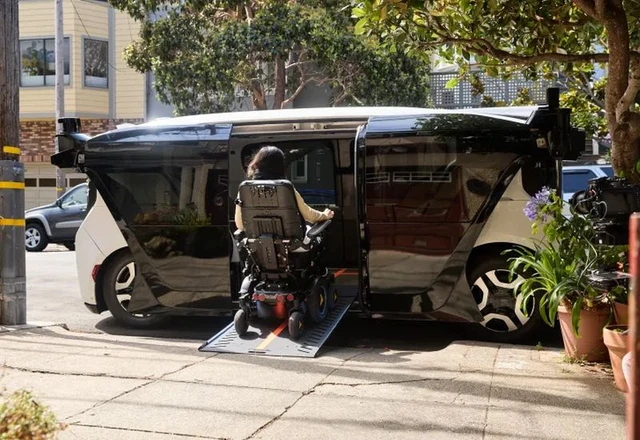
The industry has seen more radical attempts in the past. General Motors' Cruise Automation developed the Origin—a futuristic autonomous shuttle designed from the ground up as a maximally inclusive space. Technically, the Origin solved the problem of autonomous mobility for wheelchair users; however, financial instability and subsequent funding cuts effectively ended its prospects for mass production.
In the current market landscape, Tesla stands as one of the few companies willing to invest in a purpose-built vehicle designed from scratch. This presents the company with an opportunity not only to capture an underserved market but to establish a new global standard for urban accessibility—one where systemic autonomy serves as a genuine tool for the empowerment and emancipation of people with disabilities.
 Intel’s Strategic Play for Advanced Packaging Supremacy