The software engineering landscape is undergoing a fundamental paradigm shift, evolving beyond basic autocomplete utilities toward fully autonomous AI agents. Against this backdrop, xAI’s decision to open-source Grok Build sets a significant precedent for the global engineering community. By bridging the generative power of Large Language Models (LLMs) with the precision of a terminal-based interface, the tool is now available for rigorous scrutiny and modification. This paves the way for truly bespoke development environments, ensuring that ultimate control over data and logic remains firmly in the hands of the developer.
The arrival of Grok Build signals a paradigm shift, moving beyond the concept of a mere "coding chatbot" toward full-scale agentic interaction directly within the terminal. The tool is designed as a hybrid of a Command Line Interface (CLI) and a full-screen Text User Interface (TUI), allowing developers to remain within their native environment without the friction of switching between an IDE and a chat window. By open-sourcing the code on GitHub, xAI has transformed the tool from a proprietary product into a transparent, auditable open standard for development.
The project's technical foundation is built on Rust, ensuring high performance and memory safety—critical requirements for tools that must integrate deeply with the file system and execute system-level commands. At its core lies an "agentic loop": a sophisticated mechanism that does more than generate text; it constructs task context, processes model responses, and dispatches calls to specific tools. To ensure seamless interaction between these components, the system utilizes Protocol Buffers (protoc), guaranteeing strict data structures and high-speed serialization.
Grok Build’s functional toolkit includes built-in capabilities for direct code manipulation, ranging from file reading and editing to deep project searches and console command execution. The TUI is particularly noteworthy, providing a visual representation of the agent's plan and allowing developers to scrutinize diffs in detail before applying changes. This architecture transforms AI interaction into a controlled process where the developer acts as a supervisor, validating every action the system takes.
The extension system in Grok Build is engineered for maximum flexibility. Support for plugins, hooks, and specialized "skills" allows the agent to be tailored to the specific needs of any given project. A key strategic element is the integration of MCP (Model Context Protocol) servers, effectively turning Grok Build into an open hub capable of connecting to external data sources and third-party services. Furthermore, the ability to employ sub-agents allows complex tasks to be delegated to specialized modules, mimicking the structure of a professional development team.
The challenge of cloud dependency is addressed by decoupling the agent logic from the underlying large language model (LLM). While Grok Build defaults to the xAI API, its open nature allows requests to be rerouted to locally deployed LLMs via compatible interfaces. This ensures that developers can maintain total code confidentiality by running models on their own hardware while retaining full agentic management and TUI functionality.
xAI’s strategic decision to open-source the project is driven by the desire to create a robust "harness"—a proven environment for testing and operation. Publishing the code not only simplifies external security audits but also incentivizes the community to build its own extensions and integrations. Consequently, Grok Build ceases to be just another corporate product; it becomes a reference implementation for what a modern AI agent for professional software engineering should look like.

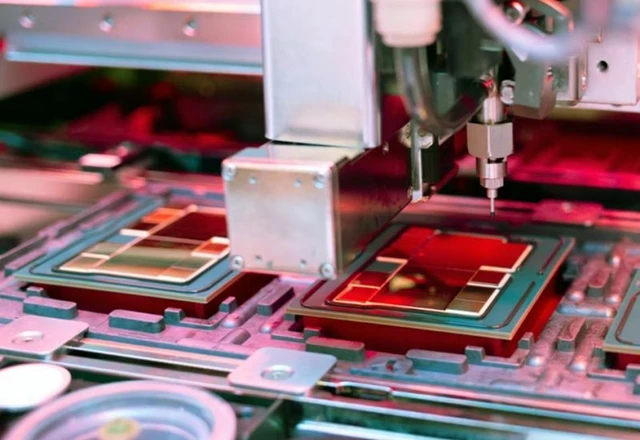 Intel’s Strategic Play for Advanced Packaging Supremacy