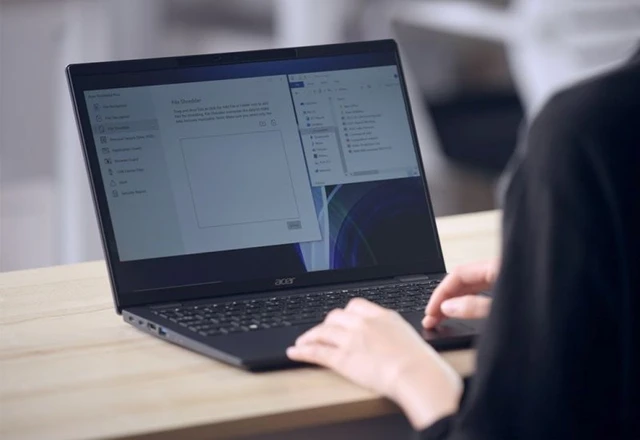
The divide between mobile devices and full-scale workstations has effectively vanished. The debut of the Googlebook signals a strategic pivot in our understanding of what a modern laptop should be in the age of artificial intelligence. At the heart of this concept is an ambition to fuse the agility of a mobile ecosystem with the raw computational power of a desktop. This is not merely the launch of a new product line, but a sweeping experiment in reimagining the user experience.
The debut of the Googlebook is less a hardware launch and more a software manifesto. By partnering with industry titans—including Acer, Asus, Dell, HP, and Lenovo—Google has introduced a class of devices designed to dissolve the traditional boundary between the smartphone and the computer. With a price point starting at $899, these machines target the mass-market user who has outgrown the limitations of ChromeOS but still prizes the seamlessness of cloud-native services.
The foundation of the Googlebook is Aluminium OS. To the casual observer, it appears to be a deeply optimized version of Android tailored for large screens; however, the technical leap from Google's previous attempts to integrate mobile apps into a desktop environment is colossal. Unlike ChromeOS, where Android applications ran within isolated ARCVM containers—inevitably leading to performance degradation and latency—Aluminium OS enables native execution. Applications interface directly with the hardware, leveraging the full power of the CPU and memory without the overhead of emulators.
System security is anchored by the battle-tested Google Titan chip, which establishes a hardware root of trust and detects malware at the lowest architectural level. Yet, the true breakthrough for the professional community is the implementation of the pKVM hypervisor, certified to Security Level 5. This solution radically shifts the development paradigm: a fully isolated Linux environment with a terminal is available immediately, bypassing the need to activate cumbersome developer modes. This effectively transforms the Googlebook into a potent tool for programmers and AI researchers.
The system's intelligence layer is driven by deep Gemini integration. Here, AI is not merely a chatbot, but an active orchestration agent. The Magic Pointer feature allows users to interact with any on-screen object via contextual queries, while the desktop interface becomes dynamic—widgets can be generated simply through natural language descriptions.
For content creators, Google has introduced Rambler, an advanced voice dictation system capable of transforming a stream of speech into a structured document. For developers, the Antigravity platform has been created. When paired with Claude Code and a command-line interface (CLI), it allows for the deployment of complex AI-agent workflows directly within the terminal.
The hardware specifications align with modern high-performance computing standards. Depending on the model, Googlebooks are powered by either the latest Intel Core Ultra Series 3 (Panther Lake) processors or Qualcomm's energy-efficient Snapdragon X Elite SoCs, with some configurations utilizing MediaTek solutions. The baseline RAM is set at 16GB, expandable to 32GB, while the integrated Neural Processing Unit (NPU) delivers 45 TOPS—a critical threshold for running neural networks locally.
Battery life has also reached a new echelon: the devices can sustain up to 14 hours of video playback or 16 hours of active web surfing, positioning them as genuine mobile workstations.
Ecosystem synergy is achieved through the Continue On feature, which allows users to migrate an active session from a smartphone to a laptop instantaneously while preserving full context. A unified Files app ensures transparent access to data across both devices, creating a single, cohesive information space.
Google complements its hardware offering with an aggressive service strategy. Buyers receive one year of Google AI Pro with a massive 5TB of cloud storage, along with subscriptions to YouTube Premium, Adobe Photoshop, and Nvidia GeForce Now cloud gaming. The strategy culminates in a promise of ten years of system support and security updates, elevating the Googlebook from a mere piece of consumer electronics to a long-term investment in productivity.

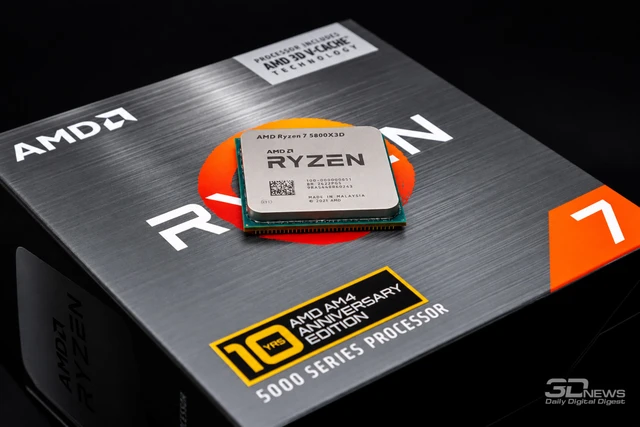 The Second Life of a Legend: Ryzen 7 5800X3D