Locating a missing pet in cellular dead zones has long been a nearly insurmountable challenge for consumer electronics. Conventional GPS trackers rely heavily on LTE infrastructure, rendering them effectively useless in dense forests, rugged mountains, or isolated rural landscapes. The integration of low-Earth orbit (LEO) satellite connectivity is a game-changer, transforming a standard collar into a sophisticated communication terminal. The new Fi Ultra brings the promise of truly global coverage to the pet wearable market.
For years, animal tracking systems have relied on a hybrid architecture: GPS modules capture satellite coordinates, which are then relayed to the owner via LTE cellular networks. However, this dependence on terrestrial cell towers created a critical vulnerability—in "dead zones," the tracker became little more than a useless accessory. Enter the Fi Ultra, which solves this by integrating the capabilities of the Starlink satellite constellation.
The device can now autonomously identify available communication channels and switch between them seamlessly. Should the LTE signal drop, the Fi Ultra automatically activates its satellite link, ensuring the dog's location is transmitted even from the most remote corners of the globe. This elevates the gadget from a mere urban accessory to a legitimate tool for expeditions and wilderness excursions.
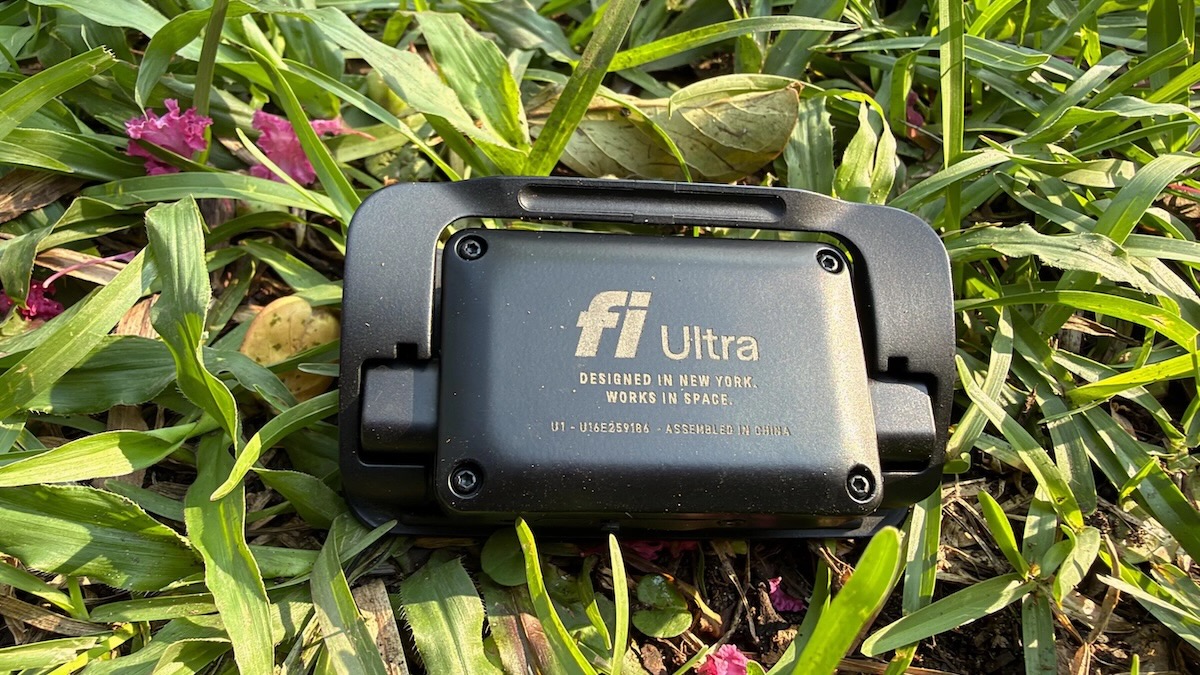
However, the integration of satellite connectivity necessitates a technological trade-off in power consumption. Transmitting data to orbit requires significantly more power than communicating with local towers or Bluetooth modules. This creates a stark contrast in battery life: while passive tags like the Apple AirTag can last a year on a single battery, and previous Fi generations lasted up to three months, the Fi Ultra’s high power requirements mean it drains in a matter of days.
To mitigate this limitation, the device employs an intelligent connection prioritization system. Rather than maintaining a constant satellite link, the tracker utilizes it only as a last resort. Energy-efficient protocols always take precedence: first Bluetooth and Wi-Fi, then LTE, and finally, Starlink. This multi-tiered approach strikes a balance between absolute reliability and operational battery life.
Beyond its navigational capabilities, the device enhances pet interaction through the Fi Callback system. Via the app, owners can send a signal to the tracker that triggers a specific combination of sound and vibration. This transforms the gadget from a simple search tool into a training aid, conditioning the dog to return to its owner upon hearing a specific auditory marker.
Priced at $200, the Fi Ultra is positioned firmly in the premium segment of the wearables market. With mounting options for both standard collars and harnesses, the Fi Ultra serves as a comprehensive insurance policy for owners of active dogs for whom city limits have long been too restrictive.

 iPhone 17: Dominating the Global Market