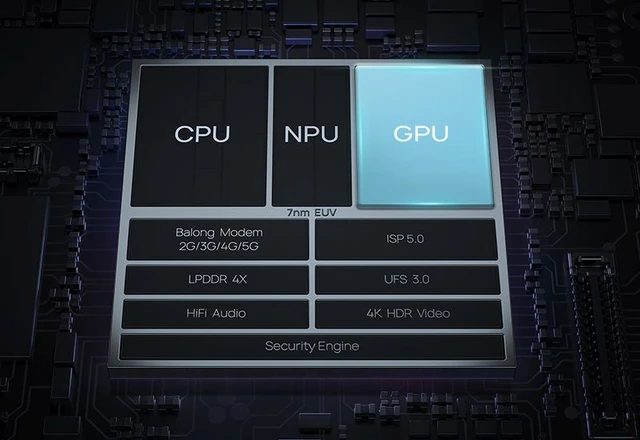
The contemporary semiconductor industry has hit a physical wall with traditional lithography; every subsequent shrink in process node now demands astronomical investment and near-miraculous engineering feats. In this climate, discovering alternative scaling pathways has evolved from a strategic advantage into a matter of survival for the industry's dominant players. Huawei is betting on a radical reimagining of the die architecture, shifting away from planar component layouts toward a multi-layered approach. The LogicFolding technology promises to drive gains in performance and power efficiency without the prerequisite of migrating to increasingly elusive nanometer nodes.
When the traditional trajectory of transistor scaling hits a dead end, the only viable path forward is a fundamental shift in spatial thinking. Rather than attempting to infinitely compress elements on a single plane, Huawei engineers have introduced the concept of LogicFolding. The essence of this approach lies in a transition to a multi-layer layout, which increases component density through vertical stacking, effectively transforming a flat chip into a multi-tiered technological structure.
The first manifestation of this strategy will be the Kirin 2026 processor, slated for integration into the new line of Mate flagship smartphones. The results of implementing LogicFolding are striking: transistor density is projected to surge by 55% compared to the Kirin 9030 Pro. In the semiconductor industry, such a leap typically requires roughly three years of intensive R&D; however, the transition to multi-layering allows this progress to be achieved in a single cycle.
The technical dividends of reducing physical distances within the die are evident across all key metrics. The dual-layer layout has slashed signal path lengths by 30%. This triggers a cascade of performance gains: the number of clock buffers has been halved, while clock skew has decreased by 25%. Consequently, the system operates with greater cohesion, consuming fewer resources to synchronize data between distant nodes of the chip.
The energy profile of these new solutions also reveals a significant shift. Tests of the Kirin 2026 Pro prototype at 0.9V demonstrated that the chip peaks at just 25 degrees Celsius while maintaining the performance of its predecessor. Simultaneously, power consumption has plummeted by 41%, and heat flux density has dropped by 5.6%. This is critical for mobile devices, where thermal dissipation is constrained by chassis dimensions and energy efficiency directly dictates battery life.
The strategic roadmap for this technology spans a decade. In the coming years, clock frequencies for LogicFolding-based chips are expected to reach 3.1 GHz, climbing to 4 GHz by 2029. The ultimate objective is to achieve, by 2031, a transistor density equivalent to a 1.4nm process—a threshold that currently remains an elusive frontier for Western competitors.
However, the road to a fully "vertical" processor is fraught with significant challenges. The evolution of LogicFolding entails a transition from local signal path optimization to the creation of comprehensive multi-layer structures comprising three, four, or more tiers within a single package. Executing such an ambitious blueprint cannot happen in isolation; it requires deep synergy with specialized equipment vendors and the development of new materials capable of withstanding the unique stresses of multi-layer fabrication. In doing so, Huawei is shifting the battle for performance from the realm of nanometers to the domain of three-dimensional integration.
 iPhone 17: Dominating the Global Market