Nvidia has fundamentally overhauled its financial reporting, effectively blurring the boundaries of its traditional gaming segment. The omission of granular data for the GeForce RTX line signals a profound strategic pivot in the corporation's priorities. Gaming is no longer viewed as a standalone market, but rather as an integral component of a global edge computing ecosystem. This maneuver enables the company to obscure the actual trajectory of consumer demand amidst the breakneck expansion of artificial intelligence.
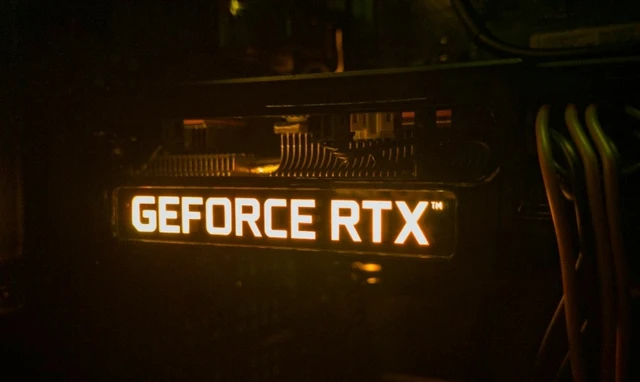
Nvidia's latest financial report for the second quarter of fiscal 2027 has sent ripples through the industry, leaving analysts bewildered. For the first time in years, the documentation completely lacks granular data regarding gaming revenue. The GeForce RTX GPUs, which for decades served as the face of the company and its primary profit engine, are no longer listed as a standalone business unit. Instead, the gaming sector has been absorbed into a new, broader category: "Edge Computing."
This reporting overhaul transforms a standard financial statement into a tool for strategic positioning. Nvidia now bifurcates its revenue streams into just two primary pillars. The dominant force is the Data Center segment, which generated a staggering $89 billion—a phenomenal surge representing an 18% increase over the previous quarter and a 117% jump year-over-year. Against this behemoth, the Edge Computing segment appears modest, with revenue totaling $7.2 billion, reflecting a 13% quarterly increase and 27% growth annually.
However, there is a critical nuance hidden beneath these figures: it is now impossible to determine exactly how much of that sum was derived specifically from the sale of gaming graphics cards. The "Edge Computing" umbrella now encompasses not only GeForce RTX desktop and portable systems but also revenue from specialized consoles (including the upcoming Nintendo Switch 2), the GeForce NOW cloud service, professional workstations, robotics, and automotive systems.
The corporation justifies this move as an effort to "better reflect" current and future growth drivers. The logic is transparent: the line between gaming and professional computing is blurring. Modern flagship solutions, such as the GeForce RTX 5090, are increasingly utilized not for gaming, but for the local deployment of complex AI models. In essence, the gaming PC is evolving into a personal AI server.
The new report shifts the narrative toward local AI and autonomous systems. Particular emphasis is placed on a collaboration with Microsoft to create RTX Spark—a platform for Windows PCs delivering up to 1 PFLOPS of performance, dedicated exclusively to machine learning tasks. The report also highlights the DGX Station for Windows and the evolution of the DRIVE Hyperion ecosystem for autonomous vehicles. In this context, gaming becomes merely one of many use cases for powerful hardware, rather than the primary purpose of its creation.
Nevertheless, this "optimization" of reporting may serve as a smokescreen for volatility in the consumer market. Rising costs for components and memory have led to a significant price hike for GPUs, which inevitably suppresses demand. By bundling gaming with the growing robotics and automotive sectors, it has become far easier to obscure a potential decline in GeForce sales.
Corroborating evidence can be found in the performance of its competitors. AMD's financial reports indicate a 31% year-over-year drop in gaming segment revenue. This suggests that the consumer GPU market is in a state of deep stagnation, and Nvidia has simply decided to stop making this decline public, finalizing its pivot toward the status of the primary infrastructure provider for the AI era.
 iPhone 17: Dominating the Global Market