The era of generative AI is forcing developers to confront a fundamental question regarding the nature of trust in code. Traditional methodologies, centered on meticulous manual review, are becoming critical bottlenecks amidst the explosive surge in LLM-driven productivity. The solution lies in a paradigm shift: moving away from analyzing source code and toward verifying behavior through rigorous automated guardrails. This evolution transforms the programmer from a writer of lines of code into an architect of constraints and quality benchmarks.
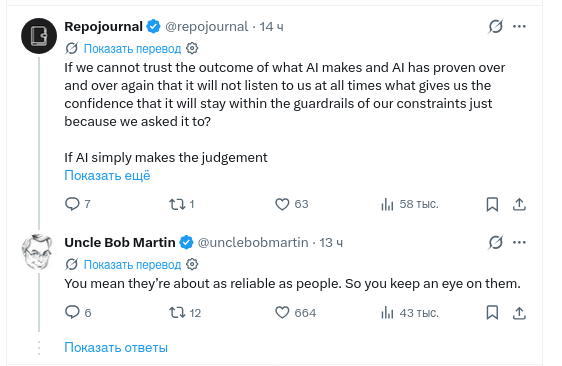
A cognitive tension is mounting within the modern software development industry. On one hand, tools powered by Large Language Models (LLMs) can generate massive volumes of code in seconds; on the other, a psychological barrier—the "opacity" of AI-generated output—stalls progress. For seasoned engineers, delegating file edits to a neural network feels precarious, as the ultimate responsibility for system stability still rests with the human. The solution, however, lies not in attempting to "bond" with the AI or endlessly auditing its output, but in a radical paradigm shift regarding control.
Rather than wasting time on manual line-by-line reviews, it is far more effective to build a system of rigorous constraints around AI agents. In this model, trust is not predicated on faith in the "intelligence" of the neural network, but on mathematical and procedural certainty that the code has passed through a multi-stage verification filter.

The cornerstone of this strategy is a comprehensive suite of automated checks. This includes traditional unit tests and Gherkin specifications, which allow system behavior to be described at a human-readable level (Behavior Driven Development). Yet, for true confidence, this is insufficient. Enter mutation testing—a method where errors ("mutations") are intentionally introduced into the code to verify whether existing tests can detect them. If a test fails to notice a logic change, the coverage is inadequate or the test itself is redundant. This stack is completed by strict quality metrics and rigorous code coverage controls.
Interestingly, the control system itself can be partially automated. Utilizing specialized AI agents to develop verification tools allows for the creation of deterministic programs—small utilities devoid of the "hallucinations" inherent to generative models. These tools handle the grunt work: analyzing cyclomatic complexity, verifying coverage, and identifying structural flaws.
In this context, the concept of "Clean Code" does not lose its relevance; rather, it acquires a new dimension. It turns out that convoluted and redundant code negatively impacts not only human developers but also the efficiency of the LLMs themselves. Complex data structures and bloated functions create noise that confuses the AI, forcing it to struggle with its own errors and hit logical impasses.

To ensure seamless agent performance, it is essential to strictly limit function size and minimize cyclomatic complexity (the number of linearly independent paths through a program's source code). Thus, clean code becomes an optimization tool for artificial intelligence. When the development environment is structured and transparent, the probability of error drops, and generation efficiency rises. Ultimately, the developer's role shifts from writing implementation to defining the boundaries of the permissible, transforming programming into the management of a rigorous requirements system.

 The Triumph of 3nm Chip Manufacturing