The global struggle for technological hegemony is entering a phase of hardline protectionism within the realm of autonomous systems. Washington is orchestrating an extensive campaign to curb the influence of Chinese UAVs, utilizing economic leverage as a tool for national security. This is not merely a matter of trade tariffs; it is a concerted effort to fundamentally restructure the supply chains of critical hardware. Such a move signals a strategic pivot toward "trusted production," where political alignment becomes the primary prerequisite for market access.
The battle for dominance over airspace and the data harvested by unmanned systems has entered a new phase of economic warfare. The U.S. administration has initiated a radical overhaul of import conditions for Chinese UAVs and their components, seeking to systematically decouple government agencies, law enforcement, and the private sector from PRC technology. At the heart of this strategy is the conviction that reliance on foreign control systems and data transmission protocols creates a critical vulnerability in national security.
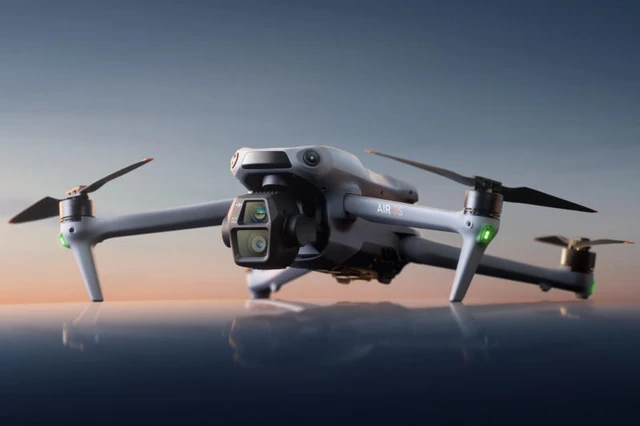
The differentiation of tariffs reflects a strategic approach to market segmentation. The most stringent measures—100% tariffs—target aircraft deemed to have "significant impact" on security: specifically, heavy-lift systems exceeding 25 kg and drones equipped with thermal imaging. Such specifications render these UAVs ideal tools for reconnaissance and infrastructure monitoring, making them primary targets for restriction. For the consumer segment (under 25 kg), a 25% tariff has been established—a significant sum, yet one that leaves some room for market maneuverability.
This move is a logical extension of policies enacted by the Federal Communications Commission (FCC), which had previously effectively blocked the import of Chinese drones by refusing to grant permits for wireless communication equipment from "adversarial" nations. Previously, the market attempted to adapt via a regulatory loophole: companies would import individual components and perform final assembly within the U.S. However, these new measures render such schemes economically untenable, effectively closing the door on bypassing restrictions through local assembly of Chinese parts.
The geopolitical scale of this conflict extends far beyond bilateral U.S.-China relations. The U.S. Department of Commerce has identified sophisticated re-export schemes where PRC products were routed through third countries to mask their origin. Consequently, more than 40 nations have come under scrutiny for facilitating the circumvention of these tariff barriers.
To stabilize the market and support strategic allies, a multi-tiered tariff system has been implemented. Trusted partners—including Japan, South Korea, Switzerland, Liechtenstein, Taiwan, and EU member states—benefit from a preferential rate of 15%. The United Kingdom has secured even more favorable terms with a 10% tariff. This creates a powerful incentive for American buyers to pivot toward allied suppliers, even if the equipment carries a premium over market rates.
The final stage of this transformation is a comprehensive state-led reshoring program aimed at bringing manufacturing capabilities back to U.S. soil. The Department of Commerce now possesses the authority to establish incentives and support for companies investing in the domestic development of UAVs and their critical components. The ultimate objective is the creation of a fully autonomous and secure production ecosystem, eliminating all external dependencies within critical technological nodes.
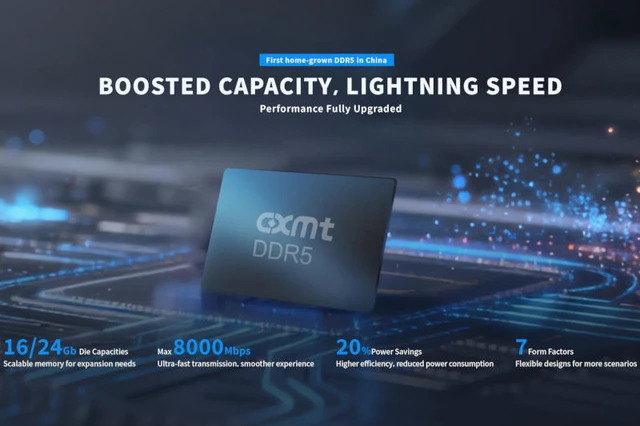 The Price of Acceleration: CXMT’s Rapid Push into Memory