The intersection of home automation and national security has reached a critical tipping point, transforming mundane domestic assistants into instruments of geopolitical surveillance. The U.S. Federal Communications Commission's (FCC) decision to restrict the import of foreign-manufactured mobile robots exposes profound regulatory anxieties regarding data exfiltration via sensor arrays. This precedent creates a paradox where even domestic brands find themselves vulnerable, caught in the crossfire of globalized supply chains. Consequently, the industry now faces an urgent imperative to overhaul its entire logistics framework and hardware certification standards.
The modern robotic vacuum cleaner has long since evolved beyond its origins as a mere floor-cleaning utility. From a technical standpoint, it is now a sophisticated array of sensors, cameras, and SLAM (Simultaneous Localization and Mapping) algorithms capable of constructing detailed 3D maps of private residences in real time. It is precisely this capacity for deep spatial scanning that has triggered stringent measures from the FCC. The regulator views foreign-made hardware as an "unacceptable threat," operating on the premise that data regarding home layouts and interior configurations could be leveraged by foreign intelligence services.
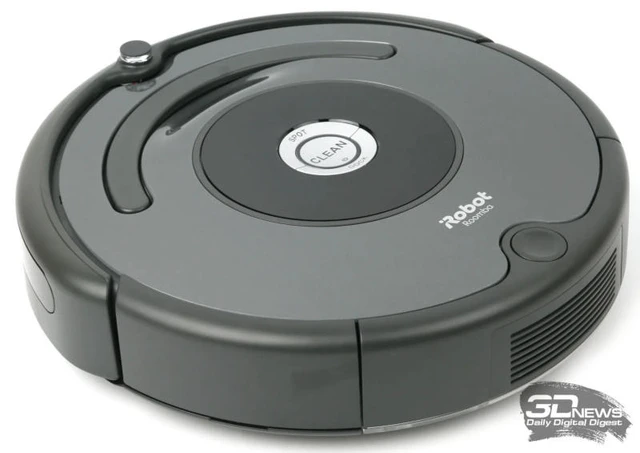
The situation is further complicated by the fact that these restrictions impact not only overseas brands but also US-headquartered companies such as iRobot and Shark. In today's economic climate, nearly all hardware for such devices is manufactured outside North America. Consequently, the very model of global outsourcing is under fire: while a brand may be American, the "silicon" and firmware remain products of foreign factories, rendering them vulnerable under these new security mandates.
The response from key market players has been measured yet cautious. Shark, Eufy, iRobot, and Narwal have synchronously emphasized that current sales and support for already certified devices will proceed as usual. For the end consumer, this means that existing devices will not be "bricked," and current retail inventory will be sold according to plan. Furthermore, manufacturers have guaranteed software updates until at least January 2029, providing the market with a critical window for adaptation.
However, beneath these assurances of stability lies a formidable hurdle. Manufacturers must now either migrate production to "safe" regions or undergo unprecedentedly rigorous hardware and software audits. For brands like Narwal, the strategic focus is shifting toward demonstrating data transparency and privacy—qualities that are becoming primary competitive advantages in an era of digital protectionism.
This case illustrates a broader global trend toward "technological decoupling." Consumer electronics, once considered a neutral zone, are being transformed into instruments of state control. The FCC's restrictions are more than just technical regulations; they are a signal that trust in foreign components within critical nodes—cameras, microphones, and sensors—has been fundamentally eroded. In the long term, this could lead to the fragmentation of the robotics market into siloed national ecosystems.
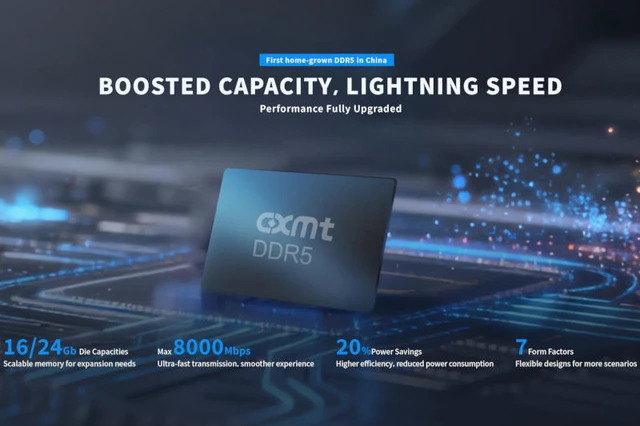 The Price of Acceleration: CXMT’s Rapid Push into Memory