Food safety and the detection of hidden allergens remain among the most pressing challenges facing modern medicine and the food industry. Despite its inherent complexity, the human sense of smell is often inadequate when confronted with trace amounts of hazardous substances or the earliest signs of food spoilage. To address this gap, American researchers have developed a high-precision "electronic nose" capable of identifying volatile organic compounds with unprecedented accuracy. This technology promises to shift quality control from the realm of subjective perception to the domain of precise, empirical digital data.
Engineering an artificial olfactory system has long been a formidable challenge, primarily due to the difficulty of detecting trace concentrations of molecules in the gas phase. However, a new breakthrough by American researchers introduces a precision system that does more than just mimic the human nose—it surpasses it in the ability to identify specific chemical markers associated with food allergens and organic decomposition.
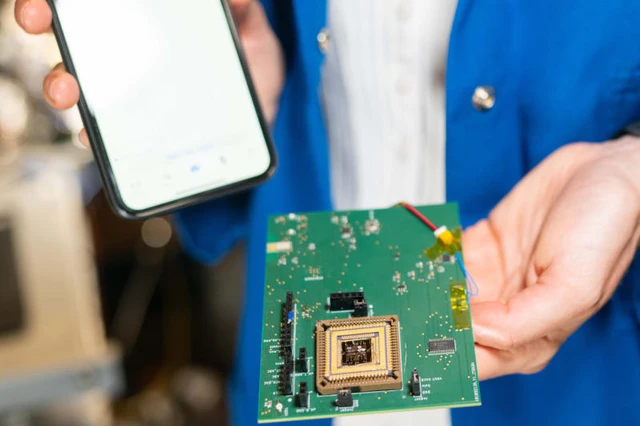
At the heart of the device is an array of 16 miniature sensors. The primary technological leap lies in the use of carbon nanotubes as the conductive material. These structures, measuring just one-hundredth the width of a human hair, provide a vast surface area for interacting with gas molecules. A critical advantage of this architecture is its ability to operate at room temperature. Unlike traditional gas analyzers, which often require sensor heating—a process that can trigger the thermal decomposition of organic compounds and distort results—the use of nanotubes eliminates this risk, thereby expanding the spectrum of detectable substances.
To interpret the sensor data, the researchers employed a machine learning model. Rather than searching for a single, specific molecule, the system analyzes the aggregate "fingerprint" or reaction profile of the entire sensor array. During the training phase, the neural network learned to recognize the unique chemical signatures of various products, ranging from berries (strawberries, blueberries) and bananas to hazardous allergens such as peanuts, cashews, hazelnuts, and walnuts.
The researchers paid particular attention to the dynamics of food spoilage. The device can detect shifts in the gas composition emitted by raw chicken, milk, and eggs left at room temperature for 24 and 48 hours. The system's remarkable sensitivity is evidenced by its ability to detect a walnut fragment weighing as little as 0.05 grams, positioning it as a powerful tool for preventing severe allergic reactions.
Nevertheless, transitioning from laboratory settings to real-world application presents several hurdles. At this stage, the question of selectivity remains: can the device isolate an allergen signal within a complex olfactory "cocktail," such as in a multi-ingredient salad or a cake? Furthermore, the impact of low temperatures and the mixed gas environments typical of domestic refrigerators must still be evaluated.
The potential for this technology lies in the evolution of the Internet of Things (IoT). Integrating such sensors into "smart" refrigerators would allow for the automated monitoring of food freshness, alerting users to the onset of spoilage before it becomes perceptible to humans. This would not only enhance food safety but also contribute significantly to reducing global food waste.
 The Evolution of the Apple Home Ecosystem