The quest for fully autonomous transportation inevitably collides with the inherent irrationality of human psychology. The aggressive performance profiles of modern EVs transform even the slightest steering error into a high-impact event characterized by immense kinetic energy. A tragedy in Texas, involving a Tesla Model 3 crashing into a residence, has exposed a critical vulnerability in partial autopilot systems. The crux of the issue is not a failure of the source code, but rather the perilous transition of control from machine back to human.
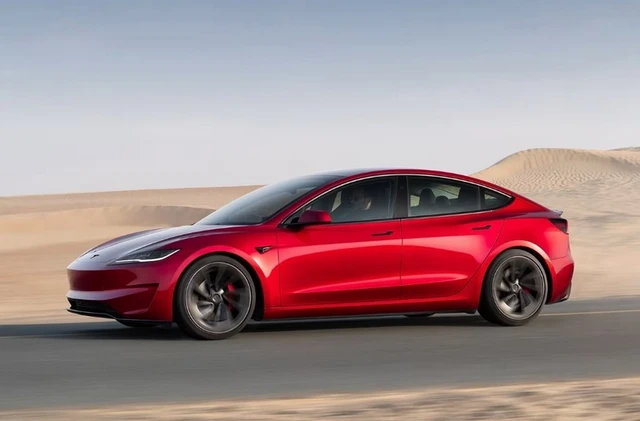
Modern electric vehicles are defined by a distinct set of physical dynamics: the combination of instantaneous torque and the immense mass of battery packs ensures that any collision with a stationary object is delivered with devastating force. When such a vehicle loses control within an urban environment, the results are often catastrophic. This was the precise scenario that unfolded in the town of Katy, Texas, where a Tesla Model 3 traveling at high speed tore through the wall of a residential home, resulting in the death of a 76-year-old woman.
The crux of the investigation centered on a pivotal question: who was actually operating the vehicle at the moment of impact—the driver or the Full Self-Driving (FSD) system? While the driver insisted that the car was under automated control, data from the onboard "black box" tells a different story. Telemetry analysis revealed that seconds before the collision, the driver regained manual control, simultaneously flooring the accelerator.
Within the residential neighborhood, the vehicle's speed surged to 117 km/h. At such velocity, the driver had virtually no window to correct the trajectory, resulting in a full-speed collision with a brick wall. The tragedy is compounded by the fact that even after the massive impact, the driver continued to depress the accelerator, signaling a total loss of situational awareness.
From a technical standpoint, the argument exonerating FSD rests on fundamental safety algorithms: within urban environments, onboard automation is strictly governed by speed limits and precludes such aggressive acceleration. Consequently, the vehicle's high speed at the moment of impact serves as primary evidence that the autopilot system had been either deactivated or overridden by manual input.
This incident serves as a textbook illustration of the "human factor" inherent in semi-autonomous systems. Road safety experts have long identified the driver as the "weakest link" during the critical transition from passive monitoring to active control. When a human, accustomed to relying on algorithms, is suddenly forced to assume full responsibility, their cognitive processing and reaction times drop precipitously.
It is highly probable that a classic error occurred: in a state of panic or stress, the driver misapplied the pedals, depressing the accelerator instead of the brake. This phenomenon is frequently observed in EV accidents due to the lack of traditional pedal resistance and the engine's instantaneous response.
This tragedy reignites the debate over the safety of mid-level autonomous systems. There is a growing consensus that "semi-autopilots" may be more hazardous than either purely manual operation or absolute autonomy. This intermediate state creates an illusion of security that dulls human vigilance, leaving the driver helpless in the very seconds when their reaction is the only thing standing between life and death for those around them.
 The Evolution of the Apple Home Ecosystem