The global race for semiconductor supremacy has shifted its focus from logic chips toward the realm of high-speed memory. China’s CXMT is now poised to challenge the long-standing hegemony of Samsung, SK hynix, and Micron by entering the LPDDR6 market. This move transcends a mere technical upgrade; it represents a pivotal component of Beijing’s broader strategic drive toward total technological sovereignty. In an era defined by the proliferation of generative AI, memory efficiency has emerged as the primary bottleneck for deploying neural networks natively on edge devices.
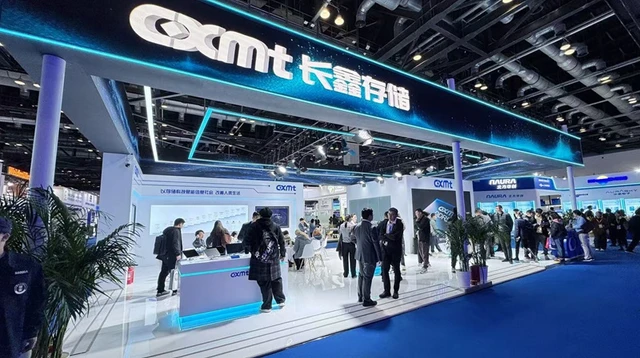
The modern semiconductor market is undergoing a period of tectonic shifts, where the struggle for dominance is fought not only over raw processing power but also within the realm of data transmission. CXMT, China's state-backed DRAM powerhouse, has effectively concluded its R&D phase and is transitioning to pilot production of LPDDR6 memory chips.
This transition represents a strategic attempt to close the technological divide with global industry leaders. Reports indicate that CXMT's new modules are capable of reaching data transfer speeds of 12.8 Gbps. For the industry, this is more than just an incremental increase in clock speed; it is a qualitative leap in the capabilities of mobile devices.
The LPDDR6 (Low Power Double Data Rate 6) standard was engineered specifically to satisfy the escalating demands of modern mobile platforms. The primary catalyst here is the rise of Edge AI—a paradigm where complex neural networks and Large Language Models (LLMs) run locally on smartphones and laptops, bypassing cloud dependencies. Such workloads demand massive memory bandwidth paired with minimal power consumption; otherwise, devices risk thermal throttling or rapid battery depletion.
From a geopolitical perspective, CXMT's success would be a landmark achievement in China's long-term pursuit of technological sovereignty. Reducing reliance on foreign components is fundamentally a matter of national security and economic resilience for Beijing. However, the journey from a successful prototype to a mass-market product is fraught with significant risks.
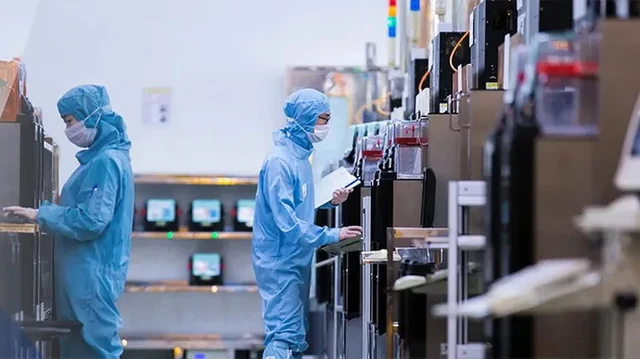
To emerge as a viable competitor to Samsung or Micron, CXMT must master the challenge of scaling: ensuring high yield rates across massive production volumes while guaranteeing flawless component reliability. Major smartphone OEMs are hypersensitive to memory quality, as any defect can trigger widespread device returns.
The situation is further complicated by external political pressures. Despite its technical potential, CXMT remains under the intense scrutiny of U.S. regulators and is listed on Pentagon blacklists. The irony of the situation is highlighted by the fact that even giants like Apple have sought U.S. government approval to source memory from CXMT in an effort to diversify their supply chains, only to be met with a firm refusal.
Consequently, the market entry of LPDDR6 will serve as a critical stress test for CXMT. Success will depend not only on technical specifications and pricing strategies but also on the company's ability to navigate stringent trade restrictions and the global shortage of high-tech memory.
 Breaking the Lithography Barrier in China