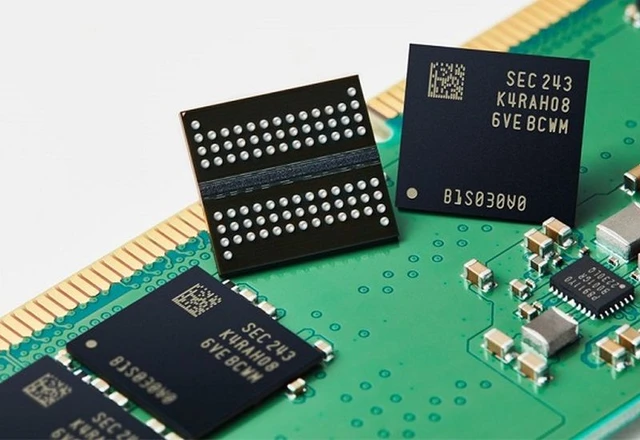
For years, the global semiconductor landscape has been dominated by a tight oligarchy of American and South Korean titans. However, the prevailing component shortages and an intensifying drive toward technological sovereignty are compelling electronics manufacturers to fundamentally overhaul their supply chains. Stepping into this void is CXMT; the Chinese firm is rapidly evolving from a regional player into a formidable global competitor. In the current climate, product availability has become a more decisive factor than pricing strategy.
For years, the hegemony of Samsung and SK hynix in the DRAM market seemed absolute. Yet, the industry has encountered a strange paradox: despite soaring demand for high-performance chips, the dominant players are bogged down by order backlogs stretching a year into the future. With new production capacity scaling slowly, smartphone manufacturers have begun scouting for alternatives capable of ensuring stable supply chains without the agonizing wait.
China’s CXMT has proven ready for this opening, demonstrating aggressive growth not just in volume, but across its entire technological stack. The transition to LPDDR5X standards marked a pivotal milestone. For instance, the new Nubia NaviX Ultra flagship already features CXMT memory modules operating at 10,667 MB/s. This signals that Chinese chips are no longer merely a "budget alternative" but are being integrated into premium devices designed to power sophisticated AI agents.
CXMT's technological surge became even more pronounced with the arrival of the LPDDR6 standard. While global leaders cautiously rolled out new specifications, the Chinese manufacturer swiftly integrated LPDDR6-12800 into the Xiaomi 18 Fold, supporting capacities up to 16 GB. This momentum is reflected in the financials: CXMT’s share of global DRAM revenue climbed from 7.6% in the first quarter to 9.5% in the second.
The geopolitical landscape adds a layer of drama to this narrative. Even Apple, known for its uncompromising quality and reliability standards, has shown interest in CXMT products for devices destined exclusively for the Chinese domestic market. However, global expansion remains stifled by stringent US trade restrictions, creating a stark bifurcation of technological ecosystems.
Financial success, bolstered by a massive IPO, has allowed CXMT to accumulate the capital necessary for significant facility expansion. Notably, the company's strategy does not rely on predatory pricing; CXMT products are not necessarily cheaper than their Korean counterparts. Instead, the primary competitive advantage is the ability to guarantee quotas and supply volumes at a time when Micron, Samsung, and SK hynix simply cannot keep pace with the industry's insatiable appetite.
 Analog Aesthetics in Digital Execution