The global AI arms race is shifting from the realm of algorithms to the domain of physical hardware. While the industry was preoccupied with the phenomenal efficiency of the R1 model, DeepSeek was quietly orchestrating a strategic leap. The development of a proprietary, specialized inference chip is designed to sever dependencies on external vendors and radically optimize computational costs. This move heralds the dawn of the "full-stack" era, where the boundary between software and silicon is effectively erased.
The modern AI market is undergoing a pivotal shift: the center of gravity is moving from the training of gargantuan models to their deployment. Inference—the process of generating real-time responses for millions of users—has become the primary cost driver. It is precisely here that DeepSeek sees its growth opportunity, having initiated a clandestine project roughly a year ago to develop a proprietary processor engineered exclusively for inference.
The economic rationale behind this move is simple and uncompromising. Currently, the company relies on hardware from Nvidia and Huawei, but the exorbitant cost of GPUs and their chronic scarcity create a precarious dependency. For many industry players, compute costs now account for more than half of all operational expenditures. By developing a specialized chip, DeepSeek aims to pivot away from general-purpose, often redundant solutions toward energy-efficient, cost-effective, application-specific accelerators.
The project's execution strategy is characterized by extreme stealth. Eschewing public job postings, the company has employed surgical headhunting to recruit top-tier engineers specializing in design verification, IC layout, and system software development. Simultaneously, closed-door negotiations are underway with semiconductor foundries and memory suppliers.
Of particular interest is the technical synergy between the software and the hardware. The DeepSeek-V3.1 model introduced the FP8 (8-bit floating point) format, which significantly reduces memory and bandwidth requirements. Experts suggest this was no coincidence; the algorithmic foundation was laid with the future hardware specifications of their own chip in mind. This is a textbook example of hardware-software co-design, where the neural network architecture and the transistor structure are optimized in tandem.
DeepSeek is not a pioneer here, but rather a participant in a global trend toward vertical integration. OpenAI has already announced the development of its "Jalapeño" chip in partnership with Broadcom, while Anthropic and Sakana AI are also exploring in-house production. Market leaders have realized that controlling the cost of inference is only possible through end-to-end ownership of the technology stack.
The company's ambitions are backed by formidable capital. Securing $7 billion in external funding at a valuation of up to $59 billion provides the means to build infrastructure on an unprecedented scale. Investments from giants such as Tencent and CATL are being channeled not only into silicon but into the construction of data centers ranging from megawatt to gigawatt capacities. The search for site locations—extending as far as Ulaanbaatar—underscores the company's drive to power its computations with cheap, stable energy.
The success of this venture could grant DeepSeek a decisive strategic edge. A full-stack approach—from model weights to the physical die—would provide not only economic independence from U.S. export controls but also a technological advantage over competitors forced to pay the "Nvidia tax" for general-purpose hardware.
Admittedly, the journey from blueprints to mass production will take years and require billions in investment with no guarantee of success. However, the fact that a company renowned for its algorithmic efficiency is now moving into hardware signals a new phase in the AI arms race. Victory will no longer depend solely on who writes the best code, but on who creates the superior silicon.

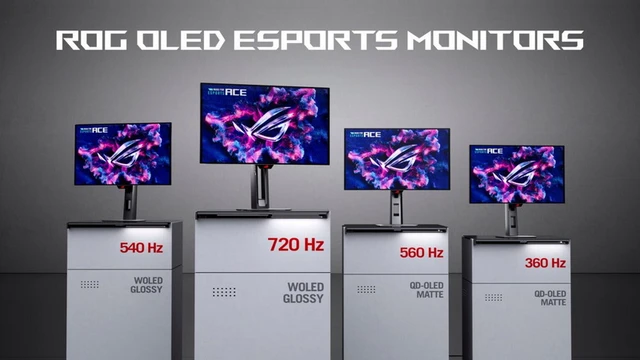 The Speed Limits of Modern Gaming Displays