Modern artificial intelligence is evolving beyond the boundaries of text prompts and image synthesis, moving decisively into the realm of real-world physical interaction. For too long, the primary bottlenecks have been data latency and the limited compute capacity of edge hardware. The launch of NVIDIA’s Cosmos 3 Edge marks a paradigm shift toward "world models"—architectures capable of operating locally and in real-time. AI is no longer merely analyzing an image; it is predicting the physical consequences of actions within a three-dimensional environment.
The industry is undergoing a fundamental paradigm shift, moving away from classical computer vision toward "Physical AI"—systems endowed with a deep understanding of physical laws and the capacity to interact meaningfully with their environment. At the heart of this transition lies Cosmos 3 Edge, a compact world model featuring 4 billion parameters. Unlike traditional neural networks limited to object recognition, this system integrates perception, prediction, and action generation into a single, cohesive loop.
The model's technical foundation rests on a Mixture-of-Transformers (MoT) architecture. This hybrid structure allows for the efficient distribution of cognitive tasks between two specialized modules. An autoregressive transformer handles logical reasoning, scene analysis, and the processing of textual instructions. Simultaneously, a diffusion transformer manages visual modeling, generating future environmental states and formulating precise action sequences for physical agents. This symbiosis enables the system to move beyond mere observation, allowing it to simulate "what-if" scenarios—a capability critical for truly autonomous systems.
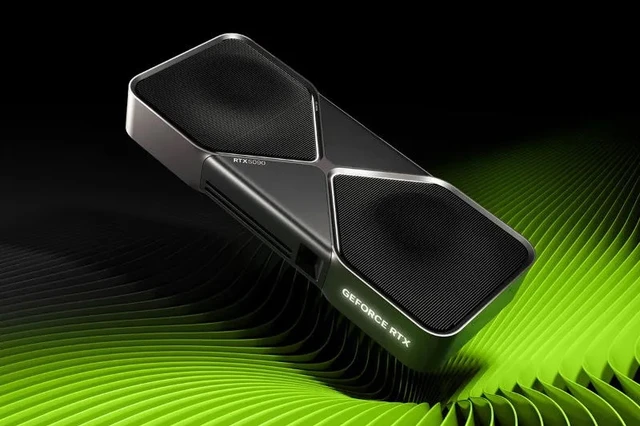
Particular emphasis has been placed on the challenge of edge inference. In robotics, cloud computing is often untenable due to latency spikes, which can lead to catastrophic failures or manipulation errors. Cosmos 3 Edge is optimized for native execution on NVIDIA hardware platforms, including Jetson Thor and the RTX series. Operating at a control resolution of 640×360, the model ensures minimal latency, allowing robots to react to environmental changes almost instantaneously.
The model's efficacy is validated by the VANTAGE-Bench benchmark, where Cosmos 3 Edge leads its size class in video analytics tasks. However, NVIDIA has gone beyond a one-size-fits-all solution. For highly specialized applications, they introduced the Policy (DROID) version, fine-tuned on the DROID dataset. This modification translates general world knowledge into concrete manipulation skills, such as precision grasping and object relocation.
Alongside the core model, accelerated generative tools have been released: Cosmos 3 Super Image2Video and Text2Image. Their high performance is achieved through DMD2 distillation from a larger version of the model, enabling the generation of high-quality visual content with a minimal number of sampling steps.
The Cosmos 3 family follows a clear scaling hierarchy. The lightweight Edge version (4B parameters) is designed for local devices; Nano (16B) serves as the mid-tier option; and Super (64B) is tailored for complex modeling tasks and high-resolution generation. All three tiers share a singular objective: creating a universal cognitive layer for robotics that fuses sensory perception with strategic planning.
The project's commitment to openness is underscored by the OpenMDW-1.1 license, which facilitates both academic research and commercial integration. By publishing the fine-tuning tools on GitHub and providing model weights via Hugging Face, NVIDIA is building the necessary infrastructure for next-generation autonomous systems, transforming the abstract concept of "world models" into a practical engineering tool.
 Energy Autonomy: The Extreme Edition