The gaming peripherals industry is undergoing a fundamental shift, moving away from mass-market standards toward a philosophy of deep personalization. As the demands for precision and near-instantaneous response times escalate, traditional controllers have become a significant bottleneck for professional gamers. The Genki Manta emerges as the answer to this challenge, seamlessly blending hardware versatility with intelligent control. This device transforms the conventional gamepad into a high-precision instrument, meticulously tailored to the user's individual style.
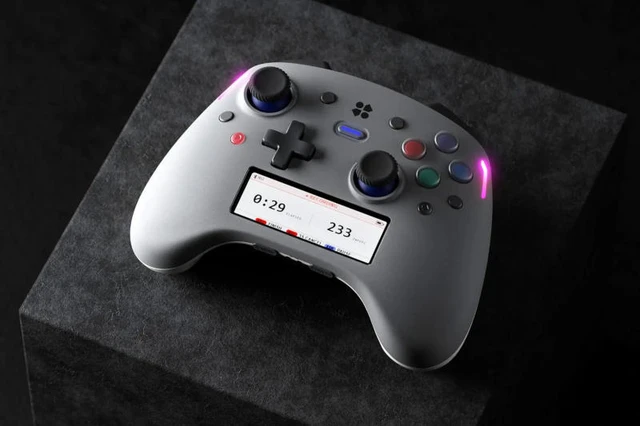
The debut of the Genki Manta on Kickstarter marks a pivotal moment in the evolution of gaming peripherals. This project represents Genki's ninth venture, transitioning the device from the realm of speculative startups into the category of refined engineering from a seasoned manufacturer. At its heart lies a 2.9-inch LCD, transforming the gamepad from a passive input device into a comprehensive control interface.
Under the hood, the Manta is powered by the Raspberry Pi RP2350 microcontroller. This high-performance chip enables a level of granular software customization rarely seen in standard controllers. Users can curate detailed profiles tailored to specific consoles and genres, fine-tune stick response, and calibrate dead zones. Furthermore, the system supports complex macros that can be recorded and edited directly on the device—a critical advantage for competitive play.
The engineering approach to tactile feedback is particularly noteworthy. The Genki Manta introduces "three-stage triggers." While premium competitors typically offer dual-mode triggers to optimize shooting or driving, the Manta adds a third level designed for maximum efficiency in rapid-fire inputs. This concept is complemented by analog buttons on the faceplate, where the actuation depth of each key is individually adjustable, allowing players to define their own trigger thresholds.
The hardware architecture of the grips further underscores a commitment to longevity and precision. The device employs tunnel magnetoresistive (TMR) sticks, which are inherently resistant to "stick drift"—the Achilles' heel of modern gamepads. Haptic feedback is handled by linear magnetic actuators, delivering a more natural and nuanced response. To ensure sustained autonomy, a removable 2600 mAh battery is included, mitigating battery degradation and allowing for seamless replacement.
Ergonomics are enhanced by six additional remappable buttons positioned on the rear and side panels, significantly expanding the command set without requiring the user to shift their grip. A standout feature is the integrated keyboard and mouse emulation mode, enabling the controller to navigate browsers or manage OS interfaces. Connectivity is versatile, supporting three protocols: classic USB Type-C, a high-speed 2.4 GHz wireless channel via adapter, and Bluetooth.
The product's pricing strategy reveals a significant delta between early access and retail availability. While the pre-order price is set at $189, the cost will climb to $279 upon official release. This approach reinforces the Manta's positioning as a premium tool for enthusiasts who prioritize precision and performance over cost.
 The Evolution of Apple's Augmented Reality Ecosystem