The divide between consumer electronics and high-performance computing (HPC) has proven far narrower than conventional wisdom suggests. In the early 2010s, a daring experiment demonstrated that off-the-shelf hardware was capable of tackling strategic challenges on a national scale. By clustering thousands of gaming consoles into a single unified network, researchers achieved levels of computational power previously reserved for multi-million dollar supercomputing installations. This project served as a critical harbinger of the current era of GPU acceleration and large-scale neural network training.
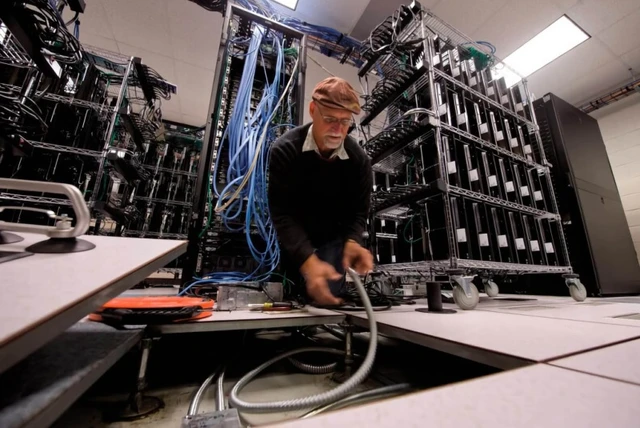
In 2010, the Air Force Research Laboratory (AFRL) launched an ambitious project known as the Condor Cluster. Rather than investing in prohibitively expensive server racks, engineers in Rome, New York, deployed a massive array of 1,760 Sony PlayStation 3 consoles. Far from being a mere technical curiosity, this system served as a robust tool for optimizing radar efficiency, deep processing of satellite imagery, and fundamental research into artificial intelligence. At its peak, the Condor Cluster ranked 33rd on the global list of the world's most powerful supercomputers.
The economic efficiency of this approach was staggering. With a total cost of approximately $2 million, the cluster represented only 5–10% of the expenditure required for professional systems of comparable power at the time. While a single PlayStation 3 unit cost roughly $400, equivalent server-grade components would have demanded upwards of $10,000 per unit. In essence, consumer-grade hardware radically lowered the barrier to entry for high-performance computing (HPC).
The project's technical viability rested on the specific architecture of the PS3, which excelled at complex graphics rendering and parallel computation. The Condor Cluster comprised an array of 168 discrete GPUs and 84 coordinating servers, achieving a cumulative performance of 500 TFLOPS. A pivotal factor in the project's success was Linux support, which allowed these gaming consoles to be transformed into fully functional compute nodes within a larger cluster.
This experiment served as a critical historical bridge to the current state of the IT industry. The Condor Cluster vividly demonstrated the potential of repurposing consumer electronics for rigorous scientific and military applications. A decade later, we are witnessing the culmination of this trajectory: GPUs have become the bedrock for training Large Language Models (LLMs) and advancing generative AI. Today, the performance gap is even more striking—a handful of modern high-performance GPUs can deliver power comparable to the entire Condor Cluster, underscoring the breathtaking scale of computational evolution over the last 14 years.
However, the era of "console supercomputing" ended as abruptly as it began. By 2015, the system was decommissioned. The primary catalyst was a shift in Sony's corporate policy; the company revoked Linux support, effectively cutting off researchers' access to critical system resources. Furthermore, the succeeding generation—the PlayStation 4—did not support similar clustering methodologies. This brought the story of the Condor Cluster to a close, leaving behind a poignant testament to the fact that innovation often flourishes at the intersection of mass-market hardware and frontier science.
 AMD’s Strategic Approach to the Budget Segment