The ethos of repairability has emerged as a cornerstone of the value proposition for modern handheld electronics. In partnership with iFixit, Valve established a gold standard for device support by granting users direct access to genuine OEM components. Recent developments, however, suggest a strategic pivot away from this approach for the base model of the console. The dwindling availability of critical replacement parts signals a broader industry shift toward new hardware paradigms and an evolving approach to product lifecycles.
A cautionary signal has emerged within the handheld gaming market: Valve appears to be restricting the supply of original LCD displays for the first-generation Steam Deck. The issue surfaced via Reddit, where users noted the disappearance of screen modules from the iFixit catalog—the company's official parts partner. Store support confirmed these concerns, stating that shipments have ceased and existing stock is no longer being replenished.
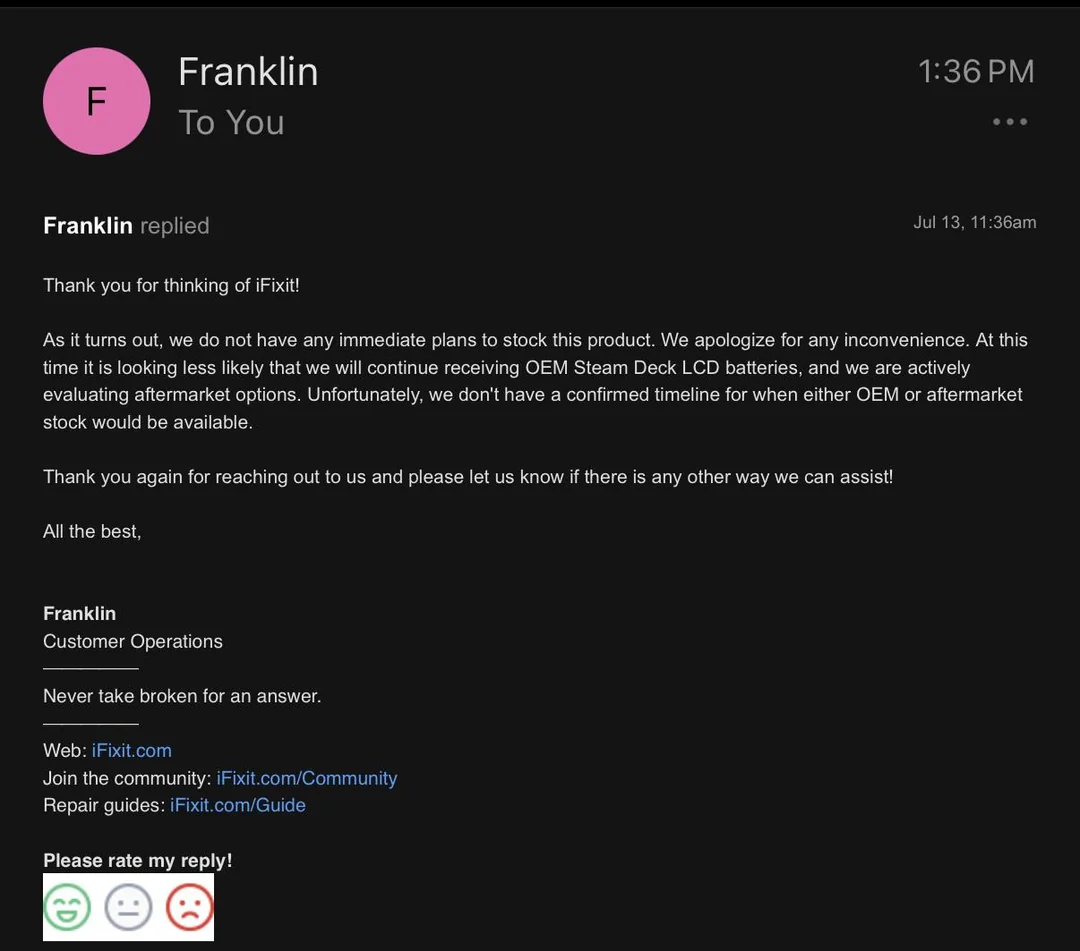
The situation remains ambiguous, as Valve has made no official announcement regarding the end of support for the base model. Meanwhile, other critical components—batteries, control boards, and chassis elements—remain available for purchase. This suggests a targeted shortage specifically affecting the 1280×800 resolution display modules.
From a technical standpoint, this trend seems inevitable. Since the first Steam Deck's debut in 2022, the industry has evolved significantly, culminating in the release of the OLED version in 2023. The transition to organic LEDs not only enhanced the visual experience and power efficiency but also necessitated a complete overhaul of the component supply chain. It is likely that Valve is optimizing its production capacity by prioritizing modern hardware, which inevitably leads to a scarcity of parts for the "first generation."
It is worth recalling that the Steam Deck was originally positioned as an antithesis to closed ecosystems. In an era where most manufacturers strive to obstruct access to a device's internals, Valve forged an open alliance with iFixit, providing detailed guides and legal access to genuine parts. This approach served as a significant manifesto for the "Right to Repair" movement, establishing the console as one of the most user-friendly devices on the market.
Now, owners of base models face a crossroads. While official supply channels are narrowing, the third-party market remains open. However, switching to non-original panels always entails risks: from discrepancies in color reproduction and brightness to potential controller compatibility issues.
The gradual phasing out of original LCD panel support is a textbook example of the high-tech product lifecycle, where innovation inevitably displaces previous standards. For users, this marks a transition into a phase of self-reliance, where the device's longevity will depend not on the manufacturer's generosity, but on the availability of quality alternatives in the secondary and third-party markets.

 The Foldable iPhone: A New Chapter for Apple