The boundary between seamless integration and psychological manipulation in AI tooling is becoming increasingly blurred. Recent observations of Claude Code’s operation via the Model Context Protocol expose a disturbing trend in user experience design: the deployment of so-called "dark patterns" to nudge users into granting extensive access to the Google ecosystem. This case underscores the mounting tension between functional utility and digital privacy in the era of autonomous agents.
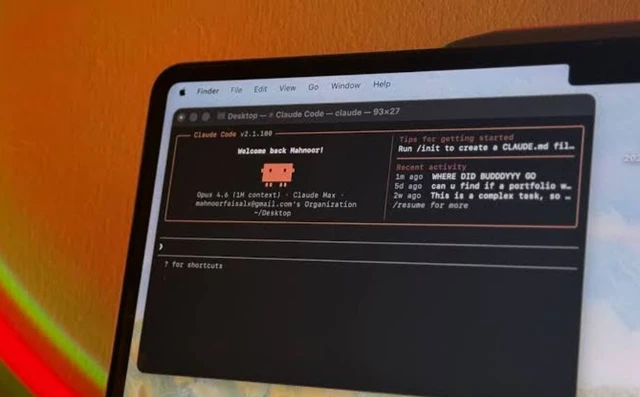
Reports have emerged within the developer and enthusiast community suggesting that Claude Code employs specific interface strategies to secure expanded access permissions for Google accounts. The controversy centers on the use of "dark patterns"—design choices engineered to nudge users into actions that may not align with their best interests by creating a false sense of urgency or necessity. In this instance, users are presented with an amber warning regarding the authentication of three MCP servers; while it appears as a critical system error or a mandatory operational requirement, it is effectively a request for access to Gmail, Google Calendar, and Drive.
At the heart of this integration lies the Model Context Protocol (MCP), an open standard pioneered by Anthropic to streamline how large language models interact with external data sources. By integrating with Google services, Claude transcends the limitations of a simple chatbot, evolving into a comprehensive personal assistant capable of analyzing emails and documents to generate contextually aware responses. Currently, this functionality is in beta and available exclusively to users on Pro, Max, Team, and Enterprise plans.
From a technical standpoint, the implementation ensures that the AI does not merely provide an answer but offers direct citations and links to the source emails and documents, providing a necessary layer of data verification. The authorization process occurs directly through the Google account, ensuring that access tokens are exchanged via industry-standard security protocols. For corporate clients (Team and Enterprise plans), an additional layer of governance is provided: the ability to enable this integration is delegated to the organization owner at the account level.
Regarding security, Anthropic asserts strict adherence to the principle of least privilege. The system maintains that data access is triggered exclusively by explicit user requests and remains confined to the connected account. A critical constraint is the "read-only" mode: Claude is precluded from creating, sending, or modifying emails. Furthermore, the model cannot access images embedded within messages, and its search capabilities are strictly limited to objects for which the user already possesses legitimate permissions.
Nevertheless, the methodology used to implement these features raises significant questions regarding UX design ethics. Utilizing warning colors and urgent phrasing to gain access to sensitive data is a textbook example of attention manipulation. As we transition into the era of "Agentic AI"—where tools begin to autonomously manage data flows—transparency in permissioning mechanisms becomes a critical factor in maintaining trust between the developer and the end user.
 Anthropic’s Strategic Push for Hardware Independence