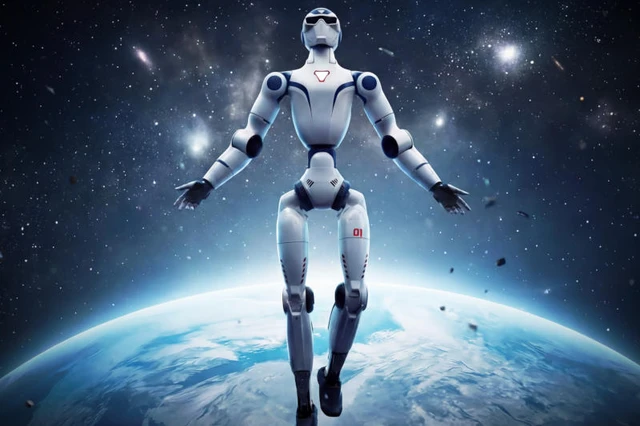
The global race to develop humanoid robotics is decisively shifting from the realm of laboratory experimentation to large-scale industrial deployment. China is aggressively positioning itself for dominance in this sector, transforming anthropomorphic machines into tangible levers for economic growth and geopolitical technological leverage. The World Robotics Conference served as a critical nexus where investor ambitions converged with practical, real-world automation use cases. The primary benchmark for success has shifted: it is no longer the theoretical elegance of algorithms, but the velocity at which they can be integrated into active production pipelines.
The sheer scale of recent developments in China suggests a strategic pivot toward total market saturation with robotic solutions. The World Robotics Conference has evolved into a showcase of industrial pragmatism: over 300 companies presented thousands of exhibits, the vast majority of which are no longer mere concepts, but market-ready products poised for commercial launch.
This surge in activity is supported by a robust financial underpinning. Investors view humanoid robots as a primary catalyst for growth, capable of mounting a serious challenge to American developments. The meteoric rise of Unitree—whose shares skyrocketed sevenfold following its public debut—demonstrates the market's massive appetite for this technology. Retail demand has outstripped supply by thousands of times, prompting other industry players, such as Lumos Robotics and a specialized division of Chery Automobile, to begin preparations for their own initial public offerings.
The modern robotics tech stack relies on a tight integration of hardware and intelligent platforms. Machine vision systems and simulation environments play a pivotal role here. Specifically, the use of the Nvidia Omniverse platform enables the creation of high-fidelity digital twins of the physical world, where robots undergo training and motion debugging before physical deployment. This minimizes interaction errors and accelerates the machines' adaptation to new tasks.
The real-world utility of robotics is currently manifesting in three primary domains: logistics, high-precision assembly, and domestic services. In the warehousing sector, Leju is demonstrating the efficiency of machines in cargo movement, while Robotera has already integrated over a hundred wheeled humanoid platforms into the operations of the China Post. In industrial manufacturing, DexForce is deploying robots on electronics packaging lines, including those at Lens Technology—a key supplier for giants like Apple and Huawei. Lumos Robotics is pushing boundaries further, automating the assembly of base modules within its own facilities, with a roadmap leading toward final product assembly.
Parallel to the industrial sector, the domestic assistant segment is rapidly maturing. X Square Robot is currently finalizing pilot projects as it prepares to bring its robots to the commercial market. However, experts note that the greatest success will be achieved by those capable of building a vertically integrated ecosystem: from the development of the core algorithm to the deployment of the machine within their own production environment.
China's primary competitive advantage has become its iteration velocity. While Western companies may spend years perfecting a single prototype, the Chinese development cycle has been compressed to six to eight months. This aggressive pace allows for the rapid identification of errors in real-world conditions and swift course corrections, transforming robotics from the realm of science fiction into a utilitarian tool for operational efficiency.
 Anthropic’s Strategic Push for Hardware Independence