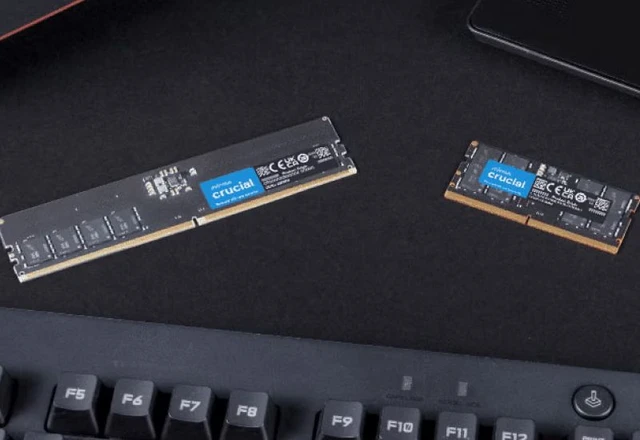
Today's global AI arms race is defined as much by hardware accessibility as it is by algorithmic prowess. Amidst acute shortages and mounting geopolitical pressure, China is aggressively pursuing a fully autonomous semiconductor manufacturing ecosystem. The $3 billion deal between CXMT and Tencent stands as a landmark event, underscoring this strategic trajectory. Far more than a mere commercial transaction, this is a calculated move to secure technological sovereignty within the critical domain of server memory.
The modern AI infrastructure market is currently navigating a period of intense volatility, where long-term strategic planning has become a prerequisite for survival. Against this backdrop, the agreement between Chinese memory manufacturer CXMT and tech giant Tencent Holdings appears to be a calculated move to hedge risks. The approximately $3 billion contract is designed to secure server DRAM supplies for a three-to-five-year window, effectively insulating Tencent from potential short-term supply chain disruptions.
Of particular interest is the specific type of memory being supplied. The AI industry is currently dominated by demand for High Bandwidth Memory (HBM), which is critical for the performance of modern GPUs. However, HBM production remains one of the most daunting technological hurdles, and imports into China are severely constrained by U.S. sanctions. While CXMT is still scaling its capabilities in this segment, it remains to be seen whether this contract serves as the first step toward the mass deployment of homegrown HBM across Tencent's data centers.
Nevertheless, CXMT is demonstrating an exponential growth trajectory. Now ranking as the fifth-largest DRAM manufacturer globally with a 7.7% market share, the company has focused heavily on its domestic market, resulting in staggering financial performance. In the first quarter of this year, revenue surged eightfold, while net profit increased more than fifteenfold year-over-year. This rapid ascent positions the company as a prime candidate for an upcoming IPO in Shanghai.
Demand for CXMT’s products extends far beyond Tencent. The company’s client roster includes industry titans such as Alibaba Cloud, ByteDance, Xiaomi, and Lenovo. It is evident that a self-contained technological ecosystem is forming within China, where the largest cloud providers are racing to lock in supply volumes for years to come. According to UBS analytics, cloud giants are currently attempting to secure more than half of their memory requirements for the next three to five years through these long-term agreements.
Interestingly, CXMT's influence is beginning to resonate beyond China's borders. Amidst a global memory shortage, even Apple is reportedly exploring the possibility of sourcing chips from the manufacturer, pending the necessary approvals from U.S. authorities. This underscores the increasing clout of the Chinese player, which is gradually evolving from a local supplier into a significant force in the global semiconductor market.
Manufacturing expansion is keeping pace with financial growth. CXMT currently operates two major facilities in Hefei and Beijing, capable of processing up to 300,000 300mm silicon wafers per month. The construction of a new plant in Shanghai is expected to double this capacity to 600,000 wafers.
Yet, the path to technological dominance is fraught with challenges. This expansion is colliding with the harsh realities of semiconductor fabrication: in the first quarter, the company reported yield issues with its advanced server-grade DDR5 chips. The high defect rate in the DDR5 segment serves as a reminder that scaling volume is only half the battle; true victory in the global semiconductor race is won through flawless yields and surgical technological precision.
 The Evolution of the Apple Home Ecosystem