The era of transmitting raw data from orbit to Earth is fading, giving way to the paradigm of deep-space edge computing. The global race for technological supremacy has evolved beyond simple connectivity, shifting toward the deployment of distributed computational power in Low Earth Orbit (LEO). Leading this charge, Shanghai Xingshu Tiansuan is taking a decisive leap by deploying infrastructure capable of processing massive data arrays directly in the vacuum of space. This strategic maneuver is designed to radically slash latency and fundamentally redefine the operational architecture of satellite constellations.
Modern aerospace is hitting a critical wall: the bandwidth bottleneck of communication channels. The traditional paradigm—where remote sensing satellites merely harvest data and relay it to ground stations for subsequent analysis—is becoming obsolete under the weight of exploding data volumes and the demand for near-instantaneous response times. The solution lies in migrating computational power directly into orbit, effectively evolving satellites from passive sensors into fully functional orbital data centers.
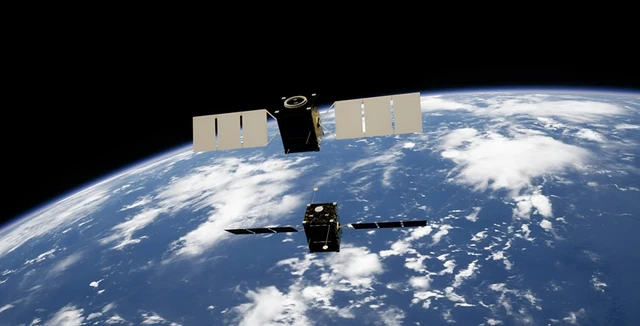
This vision is the cornerstone of the Star Pivot Plan, spearheaded by Shanghai Xingshu Tiansuan Space Technology. The launch of the initial batch of spacecraft marks the inception of a massive network envisioned to eventually encompass up to a thousand satellites. The system's primary objective is local data processing via on-board AI algorithms. By filtering noise and analyzing critical metrics in real-time, the network transmits refined analytical insights to Earth rather than gigabytes of raw imagery.
The execution of this ambitious roadmap is divided into several stages, allowing for incremental scaling and the refinement of technical nuances. The first phase involves deploying six foundational units to establish the network's core. The second stage expands the constellation to 24 units, while the final phase envisions the deployment of another 300 satellites, creating a dense computational mesh around the planet. This hierarchical architecture ensures fault tolerance and enables flexible load balancing across network nodes.
The drive to shift computation into space is not the sole prerogative of one company; it represents a broader industry pivot toward the creation of an "orbital cloud"—a potential Elon Musk and SpaceX have also identified for their own systems. However, the Chinese approach is distinguished by a high degree of synergy between various research centers and commercial enterprises.
Beyond the initiatives of Shanghai Xingshu Tiansuan, other regional projects are gaining momentum. Beijing Zhongke Tiansuan Technology and the Zhejiang Lab research center are currently developing the Three-Body Computing Constellation—another large-scale network designed to augment the overall space computing infrastructure.
Collectively, these developments signal a shift toward a new technological paradigm: space is no longer merely an environment for observation, but an active participant in the information processing pipeline. Integrating AI modules directly into satellite platforms will minimize latency—a critical requirement for early warning systems, climate catastrophe monitoring, and the management of autonomous spacecraft.
 Nvidia N1X and the New Era of Arm PCs