The contemporary full-frame camera market has entered a phase of evolutionary plateau, where disruptive breakthroughs have given way to cautious, incremental iterations. In this competitive landscape, Canon is pivoting away from fundamental sensor overhauls, choosing instead to prioritize enhanced video production capabilities and streamlined workflows. The EOS R6 Mark III aspires to be the definitive hybrid tool, blurring the line between professional photojournalism and high-end cinematography. However, beneath the ambitious spec sheet lie the engineering compromises that will ultimately dictate the device's real-world utility.
The hybrid camera segment is currently mired in a state of stagnation. Industry leaders, namely Sony and Nikon, have pivoted toward a strategy of surgical refinements. While the competition doubles down on stacked sensors to mitigate rolling shutter, Canon has focused the R6 Mark III on boosting resolution and expanding buffer capabilities. The result is a 32.5-megapixel sensor that finally bridges the detail gap between Canon and its primary competitors.
Yet, the absence of a stacked architecture leaves a mark. Data readout speeds remain stagnant, hovering around 15ms for stills and up to 18ms for video. Consequently, the "rolling shutter" effect remains a pertinent issue; rapid panning will result in noticeable vertical distortion. In this regard, the device falls short of the Nikon Z6 III, whose partially stacked sensor ensures superior readout speeds and cleaner frame geometry.
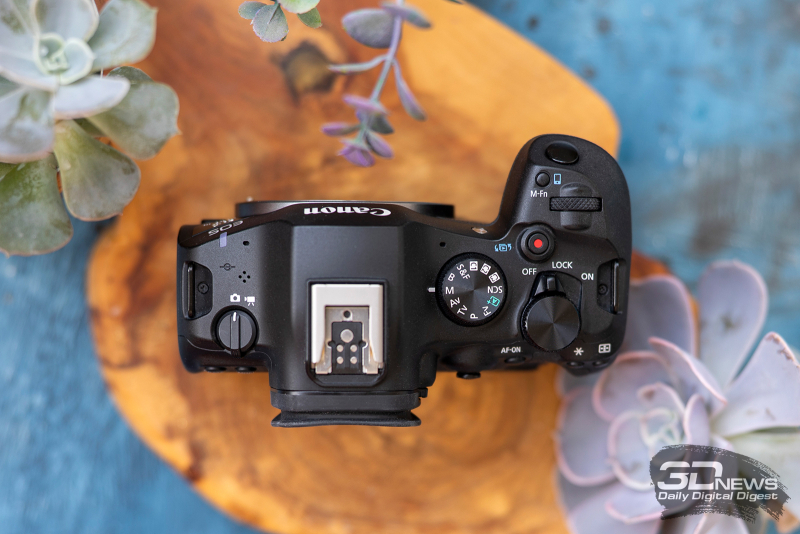
Under the hood, the device relies on the battle-tested DIGIC X processor. While it offers no revolution in still photography, Canon has successfully ported the intelligent capabilities of the flagship R5 II into the R6 Mark III. The Dual Pixel CMOS AF II system deserves particular attention. Among its most valuable features is registered person priority: the camera can memorize up to ten individuals and maintain focus on a specific subject even within a dense crowd. This transforms the device into a potent tool for reportage and event photography, where precision is paramount.
Burst rates remain impressive, reaching up to 40 fps with the electronic shutter. However, the primary technological leap is the doubling of the buffer, which now accommodates up to 150 RAW files. Coupled with the new CFexpress Type B slot, this enables extended bursts without write-speed bottlenecks, positioning the camera as a legitimate tool for sports journalism.
The sensor-shift image stabilization system has also been upgraded, achieving an efficiency of 8.5 stops at the center of the frame. When paired with stabilized RF optics, this allows for confident handheld long exposures, minimizing motion blur and permitting lower ISO settings even in the absence of a tripod.
The device's ergonomics evoke a sense of déjà vu. The chassis is virtually identical to the Mark II, reflecting Canon's conservative philosophy: if the form and grip work perfectly, there is no reason to change them. However, the interfaces suffer from a certain stagnation. The 3-inch display with 1.62 million dots and the 3.69 million-dot viewfinder appear dated compared to competitors who have long since migrated to higher-density, brighter panels. This impacts the precision of initial frame analysis directly in-camera.
In terms of connectivity, the device supports dual-band Wi-Fi and Bluetooth 5.1. Despite the reliability of the Camera Connect app integration, the lack of Wi-Fi 6 slows the transfer of heavy video files. On the plus side, full support for UVC and UAC protocols via USB Type-C is a significant advantage. The camera can now function as a high-end webcam with 4K 60p resolution without requiring third-party software.
Battery life has become the Achilles' heel of this new iteration. Despite the use of the LP-E6P battery, operating time has decreased compared to the previous model. The reduction in shots per charge forces the user to consider purchasing additional batteries, particularly during intensive use of the electronic viewfinder.
Regarding image quality, the RAW files exhibit the expected flexibility. The increased resolution provides more headroom for cropping, although aggressive shadow recovery at high ISO values may reveal chromatic noise. JPEG color reproduction remains characteristically balanced and natural, particularly in skin tones, though a slight blue shift is occasionally observable in deep shadows or twilight conditions.
The video capabilities of the EOS R6 Mark III represent the area where the camera makes its boldest leap. It now offers 4K 120p recording without a crop, allowing for the full use of the lens's focal length. Additionally, 7K RAW recording and an OpenGate 7K 30p mode have been introduced, capturing images from the entire sensor area in a 3:2 aspect ratio. This opens vast possibilities for post-production: a single source can be used to create both horizontal content for YouTube and vertical clips for social media without sacrificing quality.
However, these capabilities are constrained by physics. The lack of active cooling leads to overheating during prolonged high-quality recording. Actual runtime in 4K 60p mode is limited to approximately half an hour, making the camera unsuitable for long-form interviews, though it remains ideal for short clips and dynamic scenes. Furthermore, the extreme bitrate of 7K RAW (up to 2600 Mbps) necessitates the use of the fastest and most expensive memory cards; otherwise, recording becomes technically impossible.

In summary, the Canon EOS R6 Mark III is a balanced yet compromised instrument. It addresses most of its predecessor's pain points, evolving into a powerful video tool that remains limited by thermal management. For photographers, progress is found in the details: higher resolution, an expanded buffer, and flawless autofocus. This is a device for those who require a versatile hybrid capable of performing equally effectively in reportage and on a short-film set—provided they understand its technical boundaries.

 The Evolution of Apple's Augmented Reality Ecosystem