The contemporary corporate landscape is undergoing a fundamental transformation: communication tools are evolving beyond mere data conduits, transforming into intelligent hubs. In an era defined by autonomous agents—which demand seamless integration into workflows and deep project context—traditional messaging platforms have become critical bottlenecks. Project Buzz proposes a radical paradigm shift, positioning artificial intelligence not as an external utility, but as a full-fledged team member. It represents an ambitious effort to synthesize decentralized protocols with the pragmatic demands of modern software engineering.
The emergence of Buzz marks a fundamental paradigm shift, moving beyond the concept of "chatting with a bot" toward true agentic orchestration. At first glance, the interface may feel familiar—it mirrors the ergonomics of established corporate systems like Slack, featuring intuitive channels, threads, direct messages, and seamless media sharing. However, beneath this surface-level simplicity lies a deep integration with the development ecosystem, specifically GitHub, enabling users to manage repositories without ever leaving the communication space.
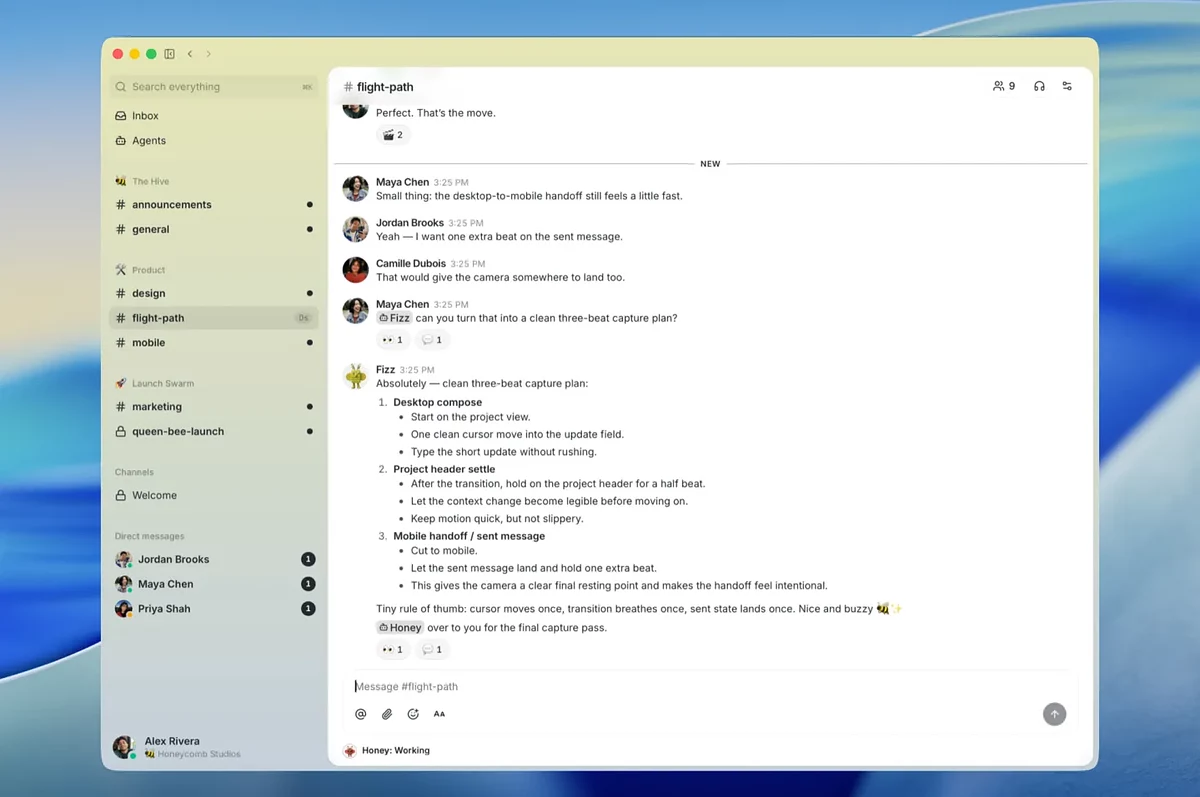
The pivotal technological shift lies in the status of AI agents within the platform. In Buzz, artificial intelligence is no longer merely an interface for queries; it becomes a first-class citizen of the workspace. Each agent is assigned its own cryptographic identity, ensuring rigorous authentication and granular access control across specific channels.
This approach transforms the AI into an autonomous collaborator: the agent can independently analyze conversations, interact with GitHub codebases, generate patches, and perform code reviews. Furthermore, the system allows agents to coordinate with one another, creating complex automation workflows that operate without direct human intervention.
The technical foundation of Buzz is architected upon the Nostr protocol—a decentralized messaging network that eliminates reliance on a single central server and ensures high levels of censorship resistance. This decision transforms the messenger into an open ecosystem where users maintain total sovereignty over their data and how it is transmitted.
To power its cognitive capabilities, Buzz supports integration with cutting-edge LLM tools such as OpenAI Codex, Claude Code, and Goose. Crucially, the platform remains provider-agnostic; rather than forcing a specific AI vendor, it provides a flexible framework allowing businesses to plug in the tools best suited to their specific operational needs.
Developed under the open-source Apache 2.0 license, Buzz allows any enterprise to deploy the system on its own infrastructure and adapt it to stringent security requirements. Currently, Buzz is available across all major operating systems—macOS, Windows, and Linux. While the product is in its early stages and does not yet aim to fully displace established corporate giants, it signals a broader industry trajectory: a move away from simple messaging tools toward decentralized environments for the collaborative synergy of humans and algorithms.
 The Triumph of 3nm Chip Manufacturing