For years, the primary bottlenecks hindering the mass adoption of electric vehicles have been "range anxiety" and the protracted nature of charging at public stations. The downtime spent tethered to a terminal often rendered long-distance travel an arduous ordeal, compromising the practical utility of EVs when measured against traditional internal combustion engines (ICE). Today, Chinese tech titans are fundamentally rewriting this narrative, slashing energy recovery times down to mere minutes. This transformation is propelling the industry beyond the realm of compromise and ushering in an era of genuine, seamless mobility.
For years, slow charging speeds served as the primary ammunition for EV skeptics. However, recent breakthroughs from Chinese automakers signal a paradigm shift: cutting-edge models can now recover 70% of their battery capacity in just 4 minutes and 22 seconds. This is no longer a laboratory curiosity; it is becoming a commercial benchmark for a new generation of vehicles.
Geely has emerged as a frontrunner in this race, integrating specialized "Golden Brick" batteries into its Lynk & Co brand. The underlying architecture of these cells allows them to handle extreme current loads, enabling record-breaking charging speeds—a capability now trickling down across the manufacturer's entire portfolio. Simultaneously, market leader BYD is deploying its Blade 2.0 solution, which delivers comparable efficiency, pushing a charge from 10% to 70% in under five minutes.
Industry competition has evolved; it is no longer about reducing overall wait times, but a granular battle for seconds. CATL, the world's largest battery manufacturer, already offers commercial vehicle solutions capable of charging from 20% to 80% in 6 minutes and 48 seconds. In the consumer segment, the bar has been raised even higher: batteries are being developed that can complete a 10-to-80% cycle in just 3 minutes and 44 seconds. FAW’s latest developments mirror these metrics, trailing CATL by only a few seconds.
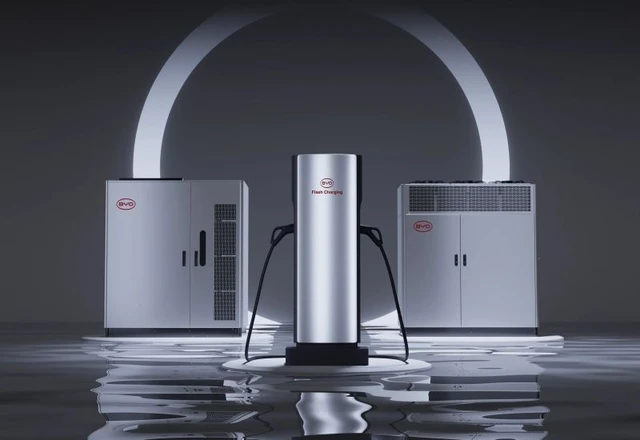
Such aggressive dynamics are contingent upon the supporting energy infrastructure. These performance figures necessitate ultra-high-power charging stations with capacities reaching up to 1.5 MW. In China, the rapid deployment of such networks is effectively migrating these specifications from demonstration rigs to public highways.
The global landscape remains fragmented. In Europe and the US, the fastest terminals rarely exceed the 500–600 kW threshold, creating a distinct technological divide. Nevertheless, BYD has already signaled its intent to establish high-power charging networks across Europe. As for North America, Chinese technological expansion may find more fertile ground in Canada due to favorable customs tariffs, while the US market remains largely inaccessible due to stringent protectionist policies.
Consequently, the EV industry is entering a phase where charging duration ceases to be a critical pain point. The transition toward megawatt-scale stations and advanced battery chemistries is effectively neutralizing the final strategic advantage of internal combustion engines: the speed of refueling.
 The Energy Efficiency Ceiling of Modern Electric Vehicles