The pivot toward streaming services has fundamentally dismantled the traditional notion of the "family screen." Audience measurement has evolved into a complex puzzle, rendering traditional panel-based research obsolete and non-representative. Nielsen, the global titan of media analytics, is tackling this challenge by deploying wearable devices to monitor viewer engagement. This move signals a paradigm shift from passive observation to the active biometric tracking of consumer behavior.
The era of linear television, where millions converged on a single broadcast, has faded into history. Modern media consumption is defined by hyper-fragmentation: content is dispersed across smartphones, tablets, smart TVs, and consoles, while viewer habits have become increasingly individualized. In this environment, legacy rating methodologies are losing their precision; they often record that a device is powered on, but fail to reliably determine how many people are actually engaging with the content in real-time.
To resolve this crisis of accuracy, Nielsen is deploying a disruptive tool: wearable devices that research panel participants are required to wear. The technological concept relies on audio identification—gadgets akin to smartwatches that stream audio and cross-reference it against a content database. This allows the system to automatically identify which movie or series a user is watching, eliminating the need for manual data entry or system authentication. Consequently, the company is shifting from proxy indicators to empirical verification of a person's presence before the screen.
However, data collection via wearables is only one component of a comprehensive modernization strategy for metrics. To achieve a holistic view, Nielsen is integrating data from DASH (Device and Account Sharing) surveys conducted by the Advertising Research Foundation. This method enables the tracking of how a single streaming account is shared among family members or friends, which is critical for understanding actual audience reach. Parallel to this, specialized monitoring programs for the Spanish-speaking segment are being launched to account for the cultural and linguistic nuances of media consumption.
The technological backbone of these changes is an updated machine learning platform. It is designed for the deep processing of massive datasets from various providers, allowing for high-precision mapping of viewing patterns against the demographic composition of specific households. ML algorithms help filter out noise and reconstruct a cohesive picture of viewer behavior—an insight that is impossible to achieve through the mere aggregation of view counts.
In the race to define the industry standard, Nielsen faces a significant challenge: the tension between privacy and user friction. While stationary home sensors were perceived as seamless elements of the interior, the requirement to wear a wrist tracker may be viewed as an overreach into personal space. Nevertheless, the industry has reached an inflection point where data fidelity outweighs conventional comfort. If the wearable experiment confirms a significant increase in rating reliability, this method could become the new global standard for media measurement, forcing other market players to follow suit.

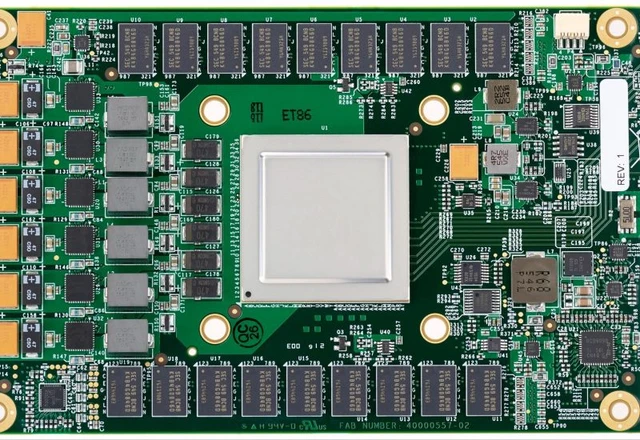 Anthropic’s Strategic Push for Hardware Independence