Every single day, hundreds of billions of cells within the human body perish and regenerate—a cycle that forms the very bedrock of biological survival. For years, tissue degradation was viewed as a stochastic process; however, recent breakthroughs have unveiled a rigorous "death-marking" mechanism. These molecular signals act as a roadmap for the immune system, facilitating the efficient clearance of cellular debris from the organism. Yet, evidence suggests that pathogens have evolved to hijack these same pathways, utilizing them as clandestine conduits to infiltrate and infect healthy tissue.
Biological regeneration is a continuous, highly calibrated process. To maintain homeostasis, the body must not only generate new cells but also flawlessly dispose of those that are aged or damaged. For years, the scientific consensus held that cellular fragmentation during death was essentially chaotic. However, recent research published in Nature Communications upends this paradigm, demonstrating that even cell death is a strictly structured process.
At the heart of this mechanism lies apoptosis—programmed cell death. Far from being mere structural collapse, it is a sophisticated biochemical cascade that allows the organism to purge hazardous or redundant elements without triggering an inflammatory response. Utilizing advanced 3D slow-motion imaging, researchers have identified specific protein markers that persist after apoptosis is complete.
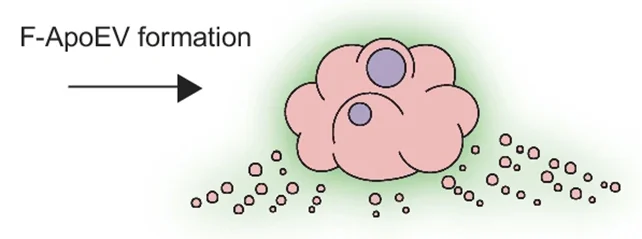
These markers are concentrated within extracellular vesicles—microscopic capsules containing genetic material and proteins. Researchers have identified a specific class of these structures termed F-ApoEVs. Essentially, these vesicles function as biological "beacons" or death trails, guiding the immune system to locate and eliminate cellular remnants.
The efficiency of this clearance system is critical to overall systemic health. When the removal of cellular debris falters, it creates a risk for severe autoimmune pathologies, such as systemic lupus erythematosus, where the body begins attacking its own tissues due to the accumulation of degradation products. F-ApoEVs ensure a rapid and seamless cleanup of the death zone, preempting inflammatory processes.
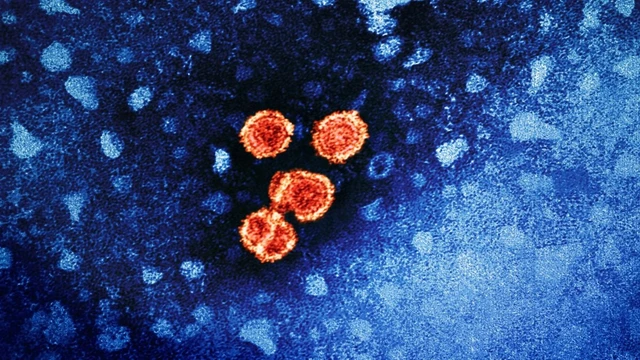
Yet, there is an evolutionary irony: viruses have evolved to hijack this system for their own ends. Experiments with the influenza virus revealed that the pathogen can masquerade within F-ApoEVs. Rather than being destroyed alongside the host cell, the virus utilizes these "death trails" as a transport mechanism.
When the immune system responds to the F-ApoEV signal and initiates the cleanup process, it inadvertently facilitates the spread of the infection, transporting viral particles hidden within the vesicles to neighboring healthy cells. Thus, a mechanism designed for protection is transformed into a "Trojan horse" that enables viral expansion.
This discovery opens new horizons in pharmacology and virology. Understanding the nature of F-ApoEVs allows for the potential development of therapeutics that either block the ability of viruses to exploit these pathways or optimize the immune system's tissue clearance. In the long term, this could lead to fundamentally new methods for combating viral infections and autoimmune diseases by intervening at the deepest level of cellular communication.
 Plasmonic Enhancement of Live-Cell Imaging