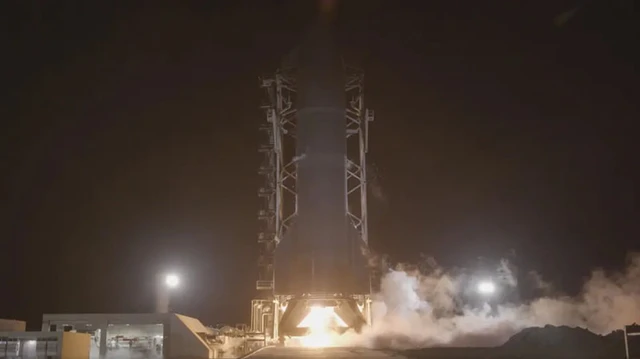
The quest for extraterrestrial life invariably begins by probing the boundaries of our own biological resilience. For decades, the lunar surface was regarded as a sterile, hostile wasteland—an environment where organic structures were thought to disintegrate instantaneously. Recent findings, however, are upending this paradigm, demonstrating that terrestrial microorganisms possess a surprising capacity to endure the Moon's extreme conditions. These insights necessitate a critical re-evaluation of planetary protection protocols and the inherent risks of biological contamination of the lunar surface.
Outer space has long been regarded as the ultimate biological frontier—an absolute barrier to life. The harsh ultraviolet spectrum, extreme thermal fluctuations, and the profound vacuum of the lunar surface render it practically uninhabitable for biological entities. As recently as 2019, the scientific consensus held that solar radiation and thermal stress constituted insurmountable obstacles for microbial survival. However, this perspective was narrow; it failed to account for the complex topography of the lunar landscape, which may function as a natural shield.
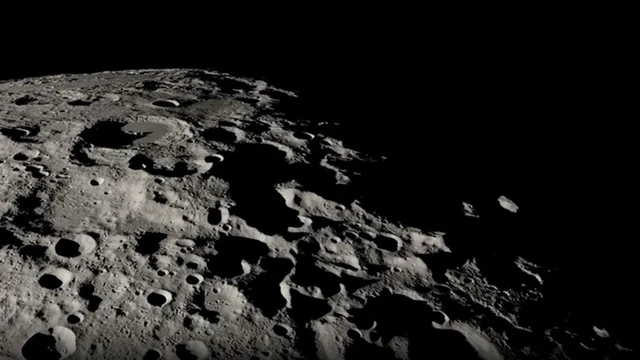
The key to survival lies in topographic features: deep valleys, ridges, and, most critically, the lunar poles. In these regions, the Sun never rises high above the horizon, creating zones of permanent shadow. These "traps" can accumulate not only volatile compounds and water ice but also biological agents, sheltering them from the lethal effects of ultraviolet radiation.
To test this hypothesis, researchers conducted a resilience analysis of three bacterial species and two fungal species. The selection focused on organisms frequently associated with crewed missions that have already demonstrated high resistance to vacuum and high-energy particles. By correlating the survival rates of these microbes with lunar temperature and radiation intensity maps, scientists identified specific zones where life remains viable.
It is crucial to understand that this does not imply active metabolism, but rather a state of cryptobiosis. This is a form of deep suspended animation in which all vital processes virtually cease. Microorganisms stop growing and moving, transforming into a kind of "biological capsule" capable of awaiting favorable conditions indefinitely.
Remarkably, creating such a survival zone does not require expansive cavern systems. Even a slight variation in micro-topography—such as an astronaut's footprint or a rover's track—can provide sufficient cover to protect a microbe from direct solar radiation, allowing it to maintain viability.
This prospect presents a profound ethical and technical dilemma for modern space agencies. With the upcoming Artemis IV mission targeting the lunar South Pole, the issue of biological contamination has moved to the forefront. The unintentional introduction of terrestrial microorganisms could not only distort the search for indigenous lunar life but could permanently alter the satellite's ecosystem.
However, there is a more provocative theory regarding the origin of lunar microbiota. Microbes may have reached the satellite millions of years ago via impact ejecta—massive cosmic collisions that literally blasted fragments of Earth's crust into space. In this scenario, the Moon becomes a giant cosmic refrigerator, preserving archaic evidence of Earth's biological history.
These discoveries open a new chapter in our understanding of the thresholds of life. The Moon is no longer merely a lifeless rock; it has become a unique laboratory for studying organic resilience. The ability of volatiles and microorganisms to persist in polar regions makes these areas a priority for future exploration, helping us determine exactly where biological possibility ends and the absolute void begins.
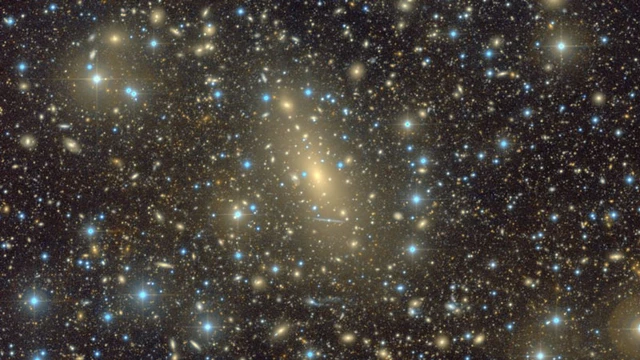 The Phenomenon of the Supermassive Galaxy IC 1101