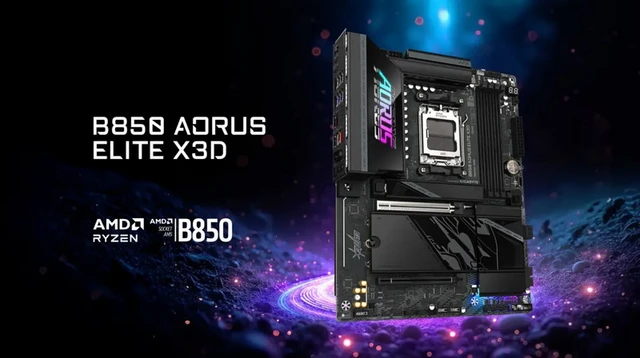
Modern gaming demands peak responsiveness and ultra-low latency from hardware. While 3D V-Cache processors have emerged as the gold standard for performance, unlocking their true potential depends heavily on the quality and optimization of the motherboard. Gigabyte meets this challenge head-on with the B850 Aorus Elite X3D, a board engineered specifically to achieve perfect synergy with these chips. This solution integrates a cutting-edge power delivery system, intelligent clock management, and uncompromising support for high-speed memory.
The B850 Aorus Elite X3D is engineered with a singular objective: to extract every ounce of performance from Ryzen X3D processors. Gigabyte’s engineering approach begins at the firmware level, with the board shipping with an up-to-date BIOS based on AMD AGESA 1.3.0.1b libraries. This foundation enables the integration of AMD EXPO Ultra Low Latency technology—a critical feature for minimizing memory latency during overclocking, which directly translates to improved minimum frame rates (1% lows) in demanding titles.
The hardware architecture creates a sharp divide between this model and the standard B850 Aorus Elite WIFI7. While the WIFI7 variant targets the mainstream consumer, the X3D modification is a precision tool for enthusiasts. It features a beefed-up 20-phase VRM (16+2+2 configuration) and dual 8-pin EPS connectors, ensuring rock-solid power delivery to the CPU even under extreme synthetic or gaming loads.
Expansion capabilities have also been significantly elevated. The board offers four M.2 slots, two of which support the PCIe 5.0 interface, guaranteeing compatibility with the next generation of ultra-fast NVMe drives. Networking is bolstered by a 5Gb LAN controller, doubling the throughput of the base model. To make room for the enhanced power delivery and high-speed interfaces, the number of SATA II ports has been reduced to two.
The centerpiece of the board's control suite is X3D Turbo Mode 2.0. Rather than a simple collection of presets, this is an intelligent system featuring two distinct profiles: Extreme Gaming Mode and Max Performance Mode. By leveraging AI algorithms, the board optimizes CPU parameters in real-time, which the manufacturer claims can boost gaming performance by up to 25%.
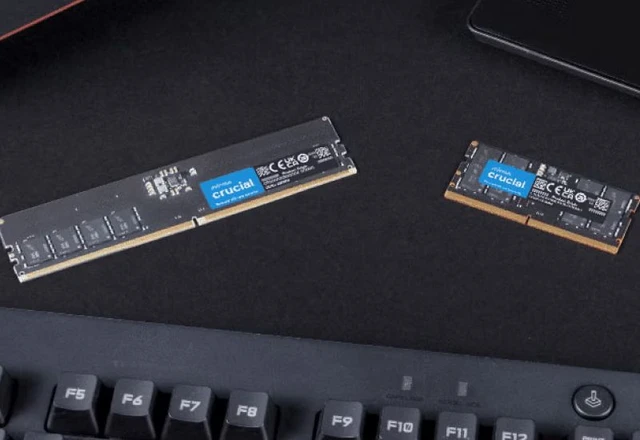
Memory management is handled via specialized D5 Bionic Corsa and Zenith Memory technologies. These solutions allow for the stable operation of DDR5 modules at overclocked frequencies of up to 8200 MHz. Despite the focus on speed, configuration flexibility remains high: four DIMM slots support up to 256 GB of RAM, making the board equally viable for heavy workstation tasks as it is for high-end gaming.
Rounding out the package is a comprehensive suite of modern connectivity. Support for Wi-Fi 7 and Bluetooth 5.4 ensures cutting-edge wireless communication. The rear I/O panel is fully loaded, featuring USB 3.2 Gen2 (including Type-C), USB 3.2 Gen1, and legacy USB 2.0 ports. For the convenience of system integrators and overclockers, the panel includes physical buttons for BIOS reset and update, as well as dedicated power and reset buttons, eliminating the need to hunt for jumpers on the PCB.
 The Evolution of the Apple Home Ecosystem