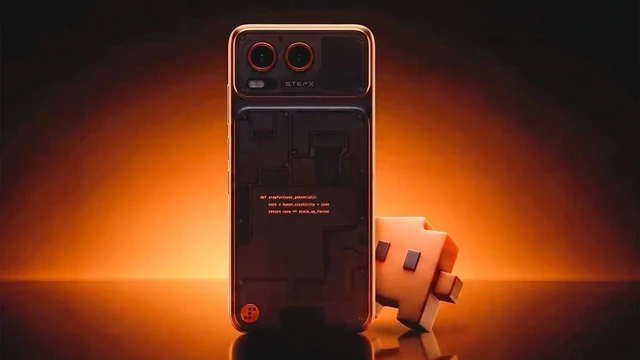
The mobile device industry has reached a critical inflection point where software is evolving from a mere utility into a primary executor. The emergence of StepX Neo signals a fundamental shift in philosophy, moving beyond the "smart assistant" trope toward the realization of truly autonomous agents. By developing Step AOS—a dedicated operating system—the company is openly challenging the long-standing dominance of traditional mobile platforms. This strategic pivot reflects a global movement toward vertical integration, grounded in the reality that granular control over hardware has become the essential catalyst for AI success.
The debut of the StepX Neo by StepFun is more than just another smartphone release; it is a fundamental reimagining of the human-machine interface. At the heart of the device lies Step AOS, an operating system engineered with a radically different philosophy: it was designed not to launch applications, but to manage autonomous AI agents. While contemporary mobile OSes attempt to layer AI features atop existing interfaces, Step AOS positions intelligence as the very foundation of the system.
The centerpiece of this ecosystem is Amoo, a personal assistant that transcends the limitations of traditional voice assistants. Rather than merely retrieving information or executing simple commands, Amoo is capable of full-scale service orchestration. It interprets complex user intent and independently coordinates actions across third-party applications. Through deep integration with platforms such as Alipay, Trip.com, and DiDi Chuxing, the device can autonomously book travel or settle invoices, effectively eliminating the need for manual navigation between fragmented interfaces.
This technological pivot exposes a fundamental flaw in traditional software: legacy operating systems were built to manage user attention via icons and windows, not to execute tasks autonomously in the background. StepFun’s leadership emphasizes that realizing the true potential of AI agents requires an environment built from the ground up—one where the agent possesses direct access to system resources and service APIs, bypassing bloated user interfaces entirely.
The drive toward total control over the "large language model > OS > hardware" chain has become the industry's dominant trend. We are witnessing a fierce struggle for hardware supremacy that has already escalated into open conflict between tech giants. The friction between Apple and OpenAI—marked by allegations of trade secret theft and the poaching of key talent—underscores how critical expertise in industrial design and hardware has become. OpenAI’s efforts to develop a portable AI companion in collaboration with Jony Ive reinforce the thesis that the future of intelligence lies beyond the confines of traditional screens.
However, the true value of devices like the StepX Neo lies not in hardware margins or advertising contracts. In the new AI economy, data is the primary asset. The smartphone remains the richest source of contextual information regarding a human's life: their movements, habits, and interactions. The continuous harvesting of this data allows an AI assistant to evolve from a general-purpose tool into a deeply personalized digital twin. Consequently, the device transforms into a sophisticated sensor for model training, making it a far more effective data collection instrument than any wearable gadget.
Founded by former Microsoft Research Asia head Jiang Daxing and backed by Tencent and ZTE, StepFun is experiencing meteoric growth, reaching a valuation of $10 billion. This trajectory confirms that the market is ready for a shift in monetization models—where value is derived not from the sale of the device itself, but from the efficiency of autonomous life management.
 Intel’s Strategic Play for Advanced Packaging Supremacy