The transition toward fully autonomous transportation has evolved beyond the confines of closed testing grounds and research laboratories, venturing into the complexities of real-world public spaces. Contemporary mobility is increasingly driven by a convergence of electrification and artificial intelligence, aiming to eliminate human error and streamline urban logistics. In the Netherlands, this trajectory has found a new application through the integration of autonomous systems into the infrastructure of one of Europe's premier theme parks. This initiative serves as a critical bellwether for the readiness of both regulatory frameworks and the underlying technology to deploy autonomous systems at scale within high-density pedestrian environments.
Efteling, the renowned Dutch theme park, has embarked on a new chapter in local transit with the deployment of the e-ATAK, an autonomous electric shuttle. Developed by the Turkish firm Karsan, this project transcends mere technological experimentation; it is a comprehensive transit solution designed to link the park's key hubs. Spanning approximately six kilometers, the route connects the main entrance to the Wonder Hotel, providing guests with seamless, complimentary mobility.
A cornerstone of the project is inclusivity. The vehicle is fully optimized for passengers in wheelchairs, underscoring a commitment to creating a universal mobility ecosystem. Operational management is handled in partnership with Arriva, one of Europe's leading passenger transport operators, effectively merging Karsan’s technological framework with deep-domain expertise in traffic flow management.
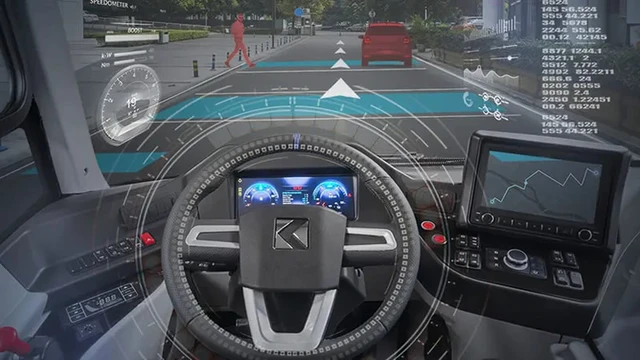
From a technical perspective, the e-ATAK adheres to SAE Level 4 autonomy. This implies the vehicle can operate entirely without human intervention, albeit within a strictly defined operational envelope. In this specific deployment, autonomy is constrained by a fixed route, predetermined speed profiles, and specific environmental and weather parameters. While the presence of an on-board steward versus a fully remote monitoring system remains a point of discussion, the system's architecture is designed for a high degree of independence from human oversight.
The "brains" of the operation are provided by Adastec, the developer of the autonomous driving system. For Karsan, this launch is a logical progression of its European expansion, following the successful implementation of similar solutions at Rotterdam The Hague Airport. Such deployments allow technologies to be battle-tested in real-world environments, where variables are far more complex than those found in simulations.
The selection of Efteling as a launch site is strategic. With millions of annual visitors, the shuttle route serves as a large-scale stress test for the AI algorithms. Operating under constant, dense passenger flows allows for the collection of unique data regarding human behavior and the vehicle's interaction with an unpredictable external environment.
Securing official regulatory approval from Dutch authorities to operate on public roads in the region signals a significant level of technological maturity. This creates a benchmark that could accelerate the scaling of autonomous transport systems across Europe, transitioning the concept of the "driverless city" from a futuristic vision into a tangible, everyday reality.
 Anthropic’s Strategic Push for Hardware Independence