Global tech markets are exhibiting a heightened sensitivity to currency fluctuations and macroeconomic instability. Apple's recent pricing adjustments in Japan serve as a prime example of how monetary pressures can supersede traditional product refresh cycles. While component costs inevitably influence the overall cost of goods sold, the current price surge is driven exclusively by the devaluation of the yen. This case underscores the corporation's strategic imperative to protect profit margins amidst volatile regional currency shifts.
The Japanese electronics market is witnessing a significant pricing recalibration across Apple's current smartphone portfolio. This adjustment spans nearly the entire spectrum: from the base iPhone 16 and budget-friendly iPhone 17e to the flagship iPhone 17 Pro and Pro Max, as well as the innovative iPhone Air. Depending on the model, prices have climbed by up to 11%—a substantial shift for the consumer segment.
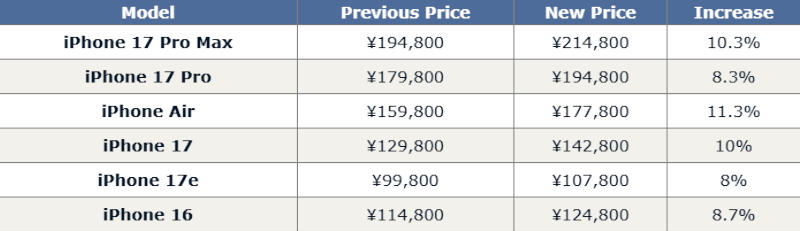
It is critical to distinguish the current situation from the events of previous months. In June, Apple implemented a large-scale price revision, but that primarily targeted the Mac and iPad lines. That instance was driven by purely technical and logistical factors—specifically, an acute shortage of memory chips and the subsequent surge in global component costs. The current iPhone scenario, however, is not about production overhead, but financial volatility. The primary catalyst is the rapid depreciation of the Japanese yen against the US dollar over the past year. Since Apple reports its financials in dollars, the devaluation of the local currency forces the company to raise prices to maintain profit margins in its primary reporting currency.
A granular analysis of specific models reveals an uneven distribution of these increases. The most significant impact is felt by the ultra-slim iPhone Air, which saw a price hike of 11.3%. Conversely, the most accessible option—the iPhone 17e—experienced a minimal increase of 8%, likely reflecting Apple's attempt to maintain a viable entry point for the mass market.
Notably, this trend is strictly regional; hardware pricing remains stable in the rest of the world. However, another parallel trend is emerging: global service inflation. Unlike hardware, the cost of iCloud+ and Apple Music subscriptions has risen across the board, including Japan and other key markets. This points to a strategic pivot toward ecosystem monetization—a revenue stream less susceptible to physical supply chain disruptions but still responsive to broader macroeconomic trends.

 The Evolution of Ultrabooks: Driven by Solid-State Cooling