The wearables industry is undergoing a fundamental paradigm shift toward Edge AI, migrating computational power from the cloud directly to the user's wrist. On-device processing is emerging as the new benchmark for privacy and latency, radically redefining the landscape of real-time health monitoring. Amidst this technological transition, Apple is asserting a near-total hegemony, evolving the smartwatch into a sophisticated, autonomous analytical hub. Current market dynamics suggest that AI-driven capabilities are rapidly transitioning from premium differentiators to baseline industry standards.
The contemporary wearables landscape is undergoing a profound transformation, with the central differentiator now being the concept of Edge AI—artificial intelligence that operates directly on the device. Unlike traditional cloud-based architectures, where data is transmitted to a remote server for processing, local AI enables the execution of complex analytical algorithms within the gadget itself. This not only minimizes latency but also addresses the critical issue of privacy, as sensitive biometric data no longer needs to leave the device.
According to the latest data from Counterpoint Research, the first quarter of 2026 saw an exponential surge in this segment: shipments of smartwatches supporting local AI increased by 70% compared to the same period last year. Against this backdrop, Apple has cemented its status as the uncontested leader, controlling approximately 90% of the entire Edge AI device market. This extreme market concentration is the result of the company's deep vertical integration, allowing it to develop both proprietary Neural Processing Units (NPUs) and the algorithms specifically optimized for them.
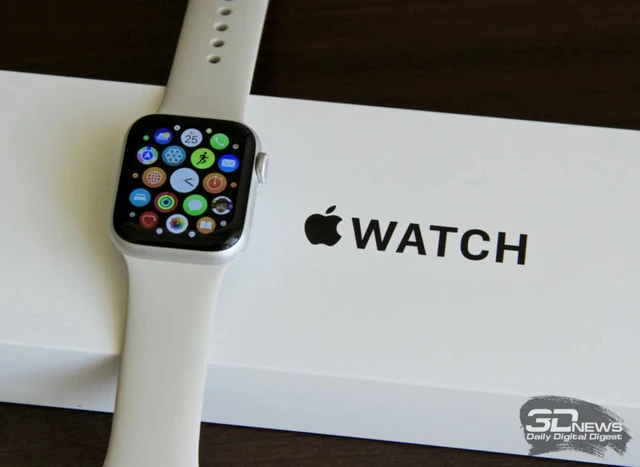
In the Apple Watch, the integrated Neural Engine handles the most computationally demanding tasks. This extends beyond Siri's voice command recognition to the implementation of sophisticated UI/UX innovations, such as gesture control, as well as the continuous monitoring of health and safety metrics. By optimizing models to be increasingly compact and efficient, Apple has successfully integrated a powerful analytical toolkit into the highly constrained form factor of a watch.
Currently, devices supporting local AI account for approximately one-quarter of the total smartwatch market. However, this share is growing rapidly, a trend evidenced by the proliferation of advanced medical features. There has been a sharp spike in demand for sophisticated diagnostics: the share of models featuring blood pressure monitoring rose from 11% to 23%, while devices with sleep apnea detection jumped from 5% to 18%. ECG capabilities also continue to strengthen their position, now accounting for 34% of total shipments.
These figures indicate that smartwatches are evolving from mere notification hubs into sophisticated medical instruments. The shift toward local AI allows devices to analyze respiratory patterns or heart rhythms in real time, instantly alerting the user to critical anomalies without requiring a network connection.
Analysts predict that by the end of the year, Edge AI penetration in the wearables segment will reach 32%. This suggests the industry is moving toward a tipping point where intelligent autonomy becomes a mandatory requirement. In this race, Apple maintains a formidable lead, turning its devices into the gold standard for how the synergy between bespoke silicon and on-device neural networks can redefine the user experience and the standards of proactive healthcare.
 Anthropic’s Strategic Push for Hardware Independence