The global AI arms race is shifting its focus from the realm of technological breakthroughs toward the dynamics of the financial markets. Anthropic is currently preparing for a US IPO that promises to be one of the most monumental public offerings in history. The company's ambitions extend far beyond mere capital acquisition; it seeks to shatter the financial benchmarks established by SpaceX. This move will serve as the definitive barometer for the true valuation of the AI industry in the modern era.
The modern landscape of Large Language Models has evolved into a battlefield where the combatants are not just algorithms, but massive concentrations of capital. In this climate, Anthropic’s preparations for an IPO represent a strategic gambit aimed at the very heart of the financial system. According to Bloomberg, the company does not merely intend to go public; it aims to set a new global benchmark, eclipsing the figures set by SpaceX. To grasp the scale of this ambition, one only needs to look at Elon Musk’s venture: its debut saw $75 billion raised, with the final sum reaching $86.2 billion following additional placements. For Anthropic, this figure has become the baseline—the minimum acceptable result.
Anthropic’s financial trajectory reflects the aggressive expansion typical of leaders during technological breakthroughs. In May of this year, the company secured $65 billion, propelling its valuation to a staggering $965 billion. This surge allowed Anthropic to overtake its primary rival, OpenAI, whose valuation stood at $852 billion following its March round. Such dynamics underscore the insatiable investor appetite for generative AI, despite the inherent risks and the exorbitant costs of compute resources.
However, beneath the luster of its valuation lies a stark economic reality. The past year was a period of heavy losses for Anthropic, with a net loss of $42 billion. This is a classic scenario for the hypergrowth phase, where expenditures on infrastructure and R&D far outweigh current revenues. Nevertheless, the second quarter of this year marked a pivotal shift: the company achieved operational profitability.
The pace of revenue growth is equally striking. By preliminary estimates, quarterly figures skyrocketed from $787 million to $11.5 billion year-over-year. By July, annualized revenue reached $65 billion, signaling the rapid commercial monetization of the company's product suite. To ensure maximum financial flexibility ahead of its autumn debut on the stock market, Anthropic plans to establish a $10 billion revolving credit facility.
The governance structure also warrants close attention. Despite its public status, Anthropic’s co-founders intend to retain majority voting rights. This is a classic control mechanism designed to allow leadership to pursue a long-term strategic vision without becoming hostage to the short-term expectations of shareholders.
The broader context of the US stock market remains mixed. From the start of the year through mid-August, new issuers raised $160.6 billion—still trailing the 2021 peak of over $195 billion. Amidst this general lull, only a few giants stand out: alongside SpaceX, a notable event was the debut of South Korea's SK hynix, which raised $26.5 billion via depositary receipts. Against this backdrop, Anthropic's ambitions appear not merely bold, but fundamentally disruptive to the modern financial landscape.

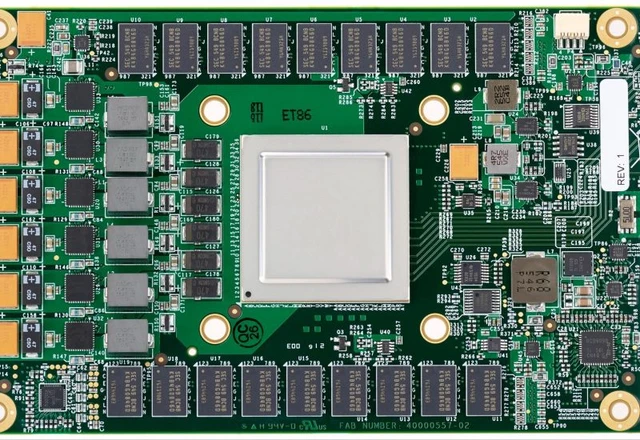 Anthropic’s Strategic Push for Hardware Independence