Humanity stands poised at the threshold of a paradigm shift, moving beyond the era of fleeting expeditions toward the comprehensive development of extraterrestrial resources. SpaceX’s ambitions are repositioning the Moon, transforming it from a mere object of scientific observation into the preeminent industrial hub of the Solar System. Central to this strategy is the deployment of autonomous manufacturing plants capable of operating entirely independent of direct human intervention. Such a transformation necessitates a radical reimagining of logistics and production methodologies tailored to the extreme rigors of deep space.
The vision of converting the Moon into a comprehensive industrial outpost is evolving from speculative fiction into a cornerstone of SpaceX’s long-term strategy. The transition from simple cargo delivery to the establishment of autonomous infrastructure implies the deployment of a network of factories where robots serve as the primary workforce. This shift is driven not only by the extreme lunar environment but also by the necessity of scaling production to levels that would be unattainable through traditional human involvement.
At the heart of this ecosystem lies the production of Starmind satellites—specialized spacecraft equipped with high-performance AI computing systems. SpaceX intends to deploy a massive constellation of these units, effectively transforming cislunar space into a distributed data center. To bypass the prohibitive costs of transporting heavy equipment from Earth, the company is leveraging the concept of ISRU (In-Situ Resource Utilization)—utilizing local lunar materials to manufacture components directly on-site.
Particular emphasis is placed on the fabrication of solar arrays and radiator systems. For high-performance AI systems, two factors are critical: a stable power supply and efficient heat dissipation—the latter being one of the most daunting engineering challenges in a vacuum. Producing these elements on the Moon would significantly reduce the launch mass required for Earth-based missions.
The technological linchpin of this architecture is the electromagnetic catapult, or mass driver. In an environment characterized by low gravity and a total lack of atmosphere, such an installation can accelerate payloads and completed satellites to orbital velocities without the need for expensive launch vehicles. This effectively zeroes out the cost of transporting products from the lunar surface into orbit, positioning the Moon as the ideal logistics hub for further deep-space exploration.
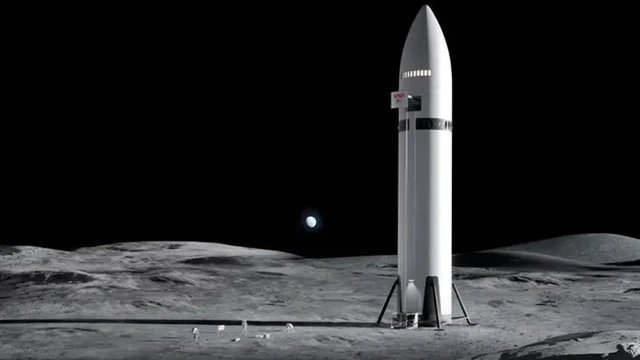
Starship serves as the bedrock of this entire framework. As a fully reusable delivery system, it is designed to radically disrupt the economics of spaceflight. Starship is expected to increase payload capacity nearly fourfold while reducing the cost per launch by approximately tenfold compared to the Falcon 9. It is precisely this level of cost optimization that makes the industrialization of Earth's satellite economically viable.
While a concrete timeline for implementation remains elusive, the concept of lunar factories signals a fundamental paradigm shift: space is transitioning from a domain of scientific exploration into a theater of real-world industrial production.
 Anthropic’s Strategic Push for Hardware Independence