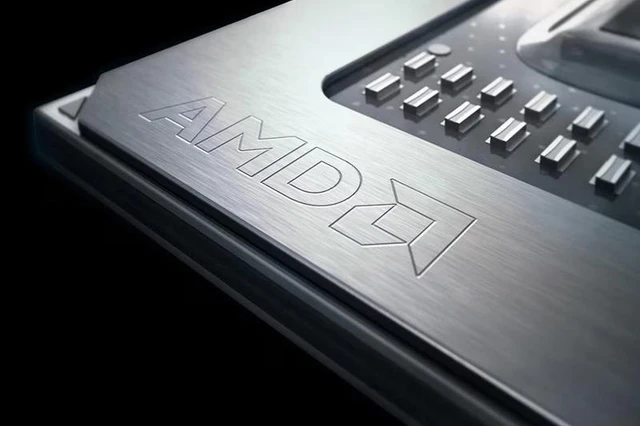
Hardware security is frequently overshadowed by raw performance benchmarks, yet it remains the fundamental bedrock of data protection. In the semiconductor industry, the divide between enterprise and consumer solutions is often leveraged as a marketing tool, leading to the arbitrary restriction of essential functionality. A recent controversy regarding the disabling of memory encryption in AMD's latest silicon has sparked a rigorous debate over corporate transparency and the user's inherent right to security. Now, the company has been compelled to acknowledge the lapse and reinstate this critical layer of protection within the Ryzen 9000 series.
Modern data security is predicated on the principle of minimizing trust in the physical perimeter. One of the most potent technologies in this domain is Transparent Secure Memory Encryption (TSME)—a firmware-level hardware encryption mechanism for system RAM. TSME's primary objective is to shield the system from so-called "cold boot attacks." This vulnerability stems from the fact that data persists in memory modules for a brief window even after power is disconnected, allowing an attacker with physical access to the device to extract sensitive information, including disk encryption keys.
For the enterprise sector, this functionality is a baseline requirement, branded as Memory Guard within the Ryzen Pro lineup. For a long time, it was understood that these security tools were also available to general consumers; as early as 2020, AMD confirmed TSME's functionality in consumer models, including the popular Ryzen 7 3700X. However, the release of the AGESA 1.2.7.0 microcode update shifted the landscape. Users discovered that the memory encryption option had vanished from BIOS settings, even on the latest processors such as the Ryzen 7 9700X.
The situation escalated when an enthusiast, noticing the missing feature, sought clarification from both the motherboard manufacturer, MSI, and AMD directly. The response from AMD's engineers was profoundly evasive; by admitting a lack of information on the matter, AMD representatives effectively left the user in an informational vacuum.
This silence naturally fueled suspicions of artificial market segmentation. It is not uncommon in the industry to see features already implemented at the silicon level be software-locked in consumer versions to incentivize a transition to more expensive "professional" tiers—in this case, the Ryzen Pro series. From a technical standpoint, removing a functioning feature was illogical, as the hardware support was already baked into the die.
Under pressure from the community and following a series of inquiries from specialized tech publications, AMD was forced to shift its narrative. The company officially confirmed that while Memory Guard remains a cornerstone of security for the Pro series, it acknowledged that the option had been removed from the BIOS of certain Ryzen 9000 desktop processors.
As a remedy, AMD promised to restore access to memory encryption in a BIOS update scheduled for July. This incident once again underscores the vital role of the technical community, which serves as an external auditor, preventing manufacturers from stealthily stripping product functionality to serve marketing strategies.
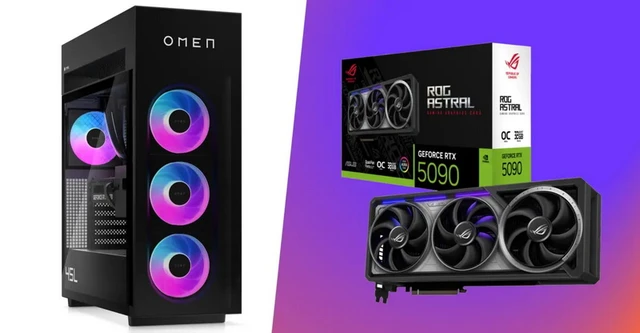 The Economic Paradox of the GeForce RTX 5090